




Why Am I So Hungry All The Time?
/
Understanding Hunger — and How to Work With Your Body Instead of Against It
If you’ve ever caught yourself thinking, “Why am I hungry again already?” — you’re not alone. Hunger is one of the most misunderstood signals in health and wellness, and it’s often treated as something to ignore, suppress, or “power through.”
But here’s the truth: hunger isn’t the enemy. In fact, being able to feel hunger is a sign that your body is communicating with you. Never feeling hungry at all isn’t a badge of honor — it can actually be a sign that your body’s natural cues are out of sync.
The goal isn’t to eliminate hunger.
The goal is to understand it, respond to it appropriately, and learn what managed hunger feels like in your body.
Let’s break this down.
Hunger Isn’t Bad — It’s Normal and It’s Information
Hunger is your body’s way of asking for energy. It’s part of a healthy feedback loop that helps regulate blood sugar, mood, focus, metabolism, and overall well-being.
When you tune into hunger — rather than fighting it — you gain insight into:
When you actually need to eat
How different foods make you feel
How long meals sustain you
What your body needs more of (not less)
Developing this awareness is a skill, and like any skill, it takes practice.
True Hunger vs. Cravings: Knowing the Difference
One of the most important distinctions you can learn is the difference between true hunger and cravings. They feel different, show up differently, and require different responses.
True Hunger
True hunger is physiological. It’s your body saying, “I need fuel.”
It’s usually:
Felt in the gut, not the mouth
Gradual in onset
Neutral (not urgent or emotional)
Relieved by eating a balanced meal
True hunger often shows up as:
A dip in energy
Mood changes (irritability, fogginess)
A physical sensation in your stomach
A sense that it’s simply “time to eat”
Decreased strength or endurance during activity
Most people experience true hunger every 3–5 hours, depending on meal composition, activity level, and individual metabolism.
Cravings
Cravings are different. They’re typically:
Felt in the mouth or mind
Very specific (something salty, sweet, crunchy)
Triggered by emotions, habits, stress, or environment
Sudden and urgent
Cravings aren’t bad either — but they don’t always mean you need fuel. Sometimes they’re signaling:
Stress or fatigue
Restriction earlier in the day
Habitual cues (time of day, location)
Emotional needs
Learning to pause and ask, “Is this hunger or a craving?” can be incredibly empowering.
Why You Might Feel Hungry All the Time
If hunger feels constant or overwhelming, it’s often not because you’re “overeating” — it’s because something is missing or misaligned.
Here are some of the most common reasons hunger feels unmanageable.
How to Create Managed Hunger (Not Suppressed Hunger)
1. Prioritize Protein at Every Meal
Protein is one of the most powerful tools for hunger regulation.
It:
Slows digestion
Supports blood sugar stability
Promotes satiety hormones
Helps maintain lean muscle
A general guideline many people find helpful is .5–1 grams of protein per pound of body weight (this varies by individual, activity level, and goals). What matters most is consistency — not perfection.
Ask yourself:
“Is protein the anchor of this meal?”
2. Balance Your Meals (Protein + Carbs + Fat)
Balanced meals help hunger stay predictable and manageable.
Each macronutrient plays a role:
Protein keeps you full
Carbohydrates provide energy and stabilize mood
Fats slow digestion and signal fullness to the brain
Meals missing one of these — especially fat or protein — often lead to hunger returning quickly.
3. Avoid Oversized Meals That Spike Blood Sugar
Meals that are very large or heavily refined can overstimulate insulin, leading to a crash later — which often feels like intense hunger.
For many people, meals around 500 calories (give or take) work well to support steady energy without blood sugar swings. This isn’t a hard rule — it’s a guide to help meals feel supportive, not exhausting.
4. Don’t Skimp on Healthy Fats
Fat is essential for satiety. Without enough of it, meals may feel unsatisfying even if calories are adequate.
Healthy fats:
Slow carbohydrate absorption
Help signal fullness
Support hormones and brain health
Think olive oil, avocado, nuts, seeds, fatty fish — small amounts go a long way.
5. Sleep Matters More Than You Think
Poor sleep directly affects hunger hormones:
Ghrelin (hunger hormone) increases
Leptin (fullness hormone) decreases
When sleep is off, hunger feels louder and cravings feel harder to manage — even if nutrition is solid.
6. Intense Workouts Can Increase Hunger — and That’s Okay
For some people, high-intensity or long-duration workouts increase hunger significantly.
This doesn’t always mean you need more food — sometimes it means you need better fuel:
More protein
More carbohydrates around training
Better hydration
More recovery support
Listen to patterns, not single days.
The Goal Isn’t to Control Hunger — It’s to Understand It
Hunger isn’t something to fix or silence. It’s something to learn from.
When you:
Eat enough
Balance your meals
Sleep well
Fuel activity appropriately
Hunger becomes calmer, clearer, and easier to respond to — not something that feels constant or chaotic.
This is what it looks like to work with your body instead of against it.
Coach’s Notes
Feeling hungry doesn’t mean you’re failing. It means your body is talking to you.
The more you listen, the more confident and intuitive your relationship with food becomes — and that’s where real, sustainable health lives.
Your next steps when it comes to hunger:
Start tuning in and dig into why you’re hungry
Notice the patterns around it
Choose an action step to take in order to begin managing your hunger
Practice that action step for 1-2 weeks and evaluate any differences
Decide what comes next - will you keep the action step you implemented or do you need to go back to the drawing board?
Repeat this process as many times as you need to in order to find the key to managed hunger
Keep Going: Your Next Steps
Want to dive deeper? Here are a few resources to keep the momentum going:
📌 Related Posts
5 Anti-Inflammatory Meals to Support Your Health and Wellness
5 Blood Sugar Management Hacks to Boost Energy and Balance Your Health
Ways To Learn & Grow
Body Insights Method - Learn how to work with your body and lifestyle to create sustainable wellness from the inside out.
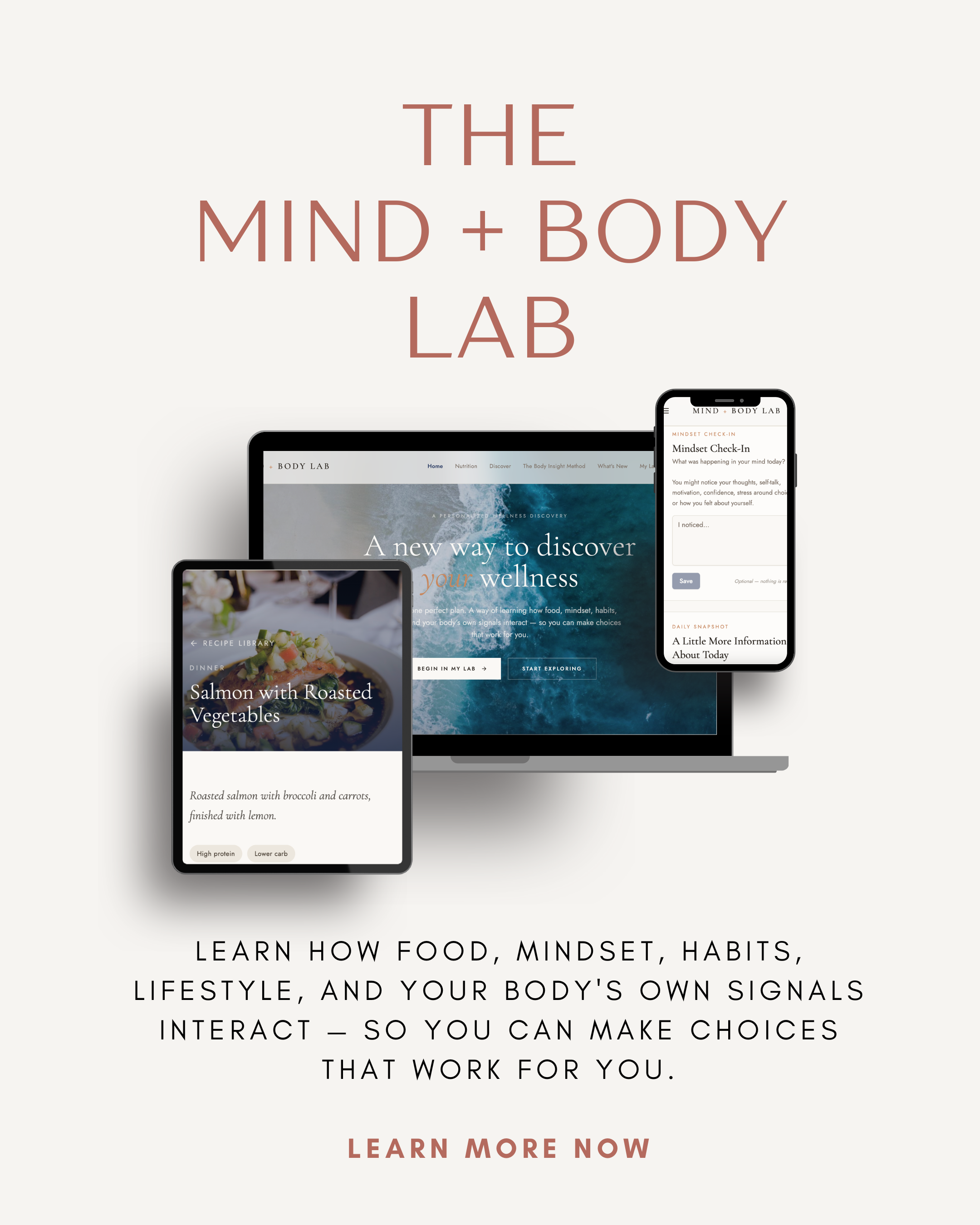
Mind-Body Lab - A guided wellness membership where you'll learn, practice, and grow with monthly education, challenges, and practical wellness tools.
Personalized Wellness Coaching - One-on-one coaching and a personalized plan designed around your body, goals, and lifestyle.
THE MIND + BODY LAB - SAY HELLO TO A NEW WAY TO APPROACH YOUR WELLNESS
A way of learning how food, mindset, habits, lifestyle, and your body's own signals interact — so you can make choices that work for you.
Includes:
Nutrition Pathways (Mediterranean, High Protein, GLP-1 & More - recipes, meal plans & action steps)
Discovery - tools & educations to learn and experiment with. Enjoy topics from mindset (identity, self-talk, limiting beliefs, perfectionism), self-care, habits and motivation to nutrition and eating behaviors.
The Body Insight Method - Learn how to tune into your body & lifestyle to create a wellness plan that works for you.
What’s New (interactive) - A space for our coaches to post weekly topics, reflective thoughts, monthly challenges and more. This is also a place for interaction. You can comment and ask questions to learn more!
My Lab (intuitive + interactive) - Your personal space to practice what you’re learning. Check in, reflect and notice what you’re learning and what’s working (or what isn’t). Let the lab provide helpful tips and pattern recognition to support your wellness & mindset goals.
Get The Mind + Body Lab Today!