


Complete Protein Food List with Serving Sizes & Protein Amounts
/
Protein, protein, protein! I feel like all I read about is how much protein you need. Protein is important for so many reasons. From managing hunger to blood sugar, healing, and satiety, protein is the macronutrient that is key in so many functions of the body. Protein is one of the most talked-about nutrients in nutrition—but it’s also one of the most confusing. Knowing which foods contain protein is helpful, but what really matters is understanding how much protein you’re actually getting per serving.
This guide breaks it all down in a simple, practical way. Below you’ll find a comprehensive list of both animal-based and plant-based protein sources, including realistic serving sizes and the grams of protein in each.
Whether your goal is weight loss, muscle maintenance, improved metabolism, or simply building more balanced meals, this resource is designed to help you make informed choices without overthinking it.
There’s no “perfect” protein source. Some foods are more protein-dense, others offer fiber, healthy fats, or micronutrients alongside protein. The goal isn’t perfection—it’s clarity, variety, and consistency. Use this list as a reference to build meals that work for your lifestyle, preferences, and health goals.
→ Ready to take your wellness journey further? Explore The Mind + Body Lab and discover the support that fits your goals—from guided learning and ongoing support to personalized coaching.
Animal-Based Protein Sources
Animal proteins tend to be more protein-dense and complete, meaning they contain all essential amino acids. These foods are especially helpful for muscle maintenance, metabolic health, and appetite control.
(Protein amounts are approximate and based on cooked portions unless noted)
Beef & Red Meat
Ribeye steak – 22g protein per 3 oz (230 calories)
Filet mignon – 23g protein per 3 oz (190 calories)
Prime rib – 22g protein per 3 oz (260 calories)
Chuck roast – 22g protein per 3 oz (215 calories)
Ground chuck (80/20) – 21g protein per 3 oz (250 calories)
Ground beef (90/10) – 22g protein per 3 oz (170 calories)
Ground beef (85/15) – 21g protein per 3 oz (215 calories)
Steak (top or bottom round) – 23g protein per 3 oz (142 calories)
Poultry
Chicken breast (skinless) – 24g protein per 3 oz (140 calories)
Chicken thighs (skinless) – 21g protein per 3 oz (180 calories)
Ground chicken – 22g protein per 3 oz (160–180 calories)
Turkey tenderloin – 24g protein per 3 oz (135 calories)
Extra-lean ground turkey – 23g protein per 3 oz (150 calories)
Fish & Seafood
Atlantic salmon (fresh) – 22g protein per 3 oz (175 calories)
Canned salmon – 21g protein per 3 oz (140 calories)
Sockeye salmon – 23g protein per 3 oz (≈ 143 calories)
Swordfish – 23g protein per 3 oz (≈ 146 calories)
Grouper – 24g protein per 3 oz (≈ 110 calories)
Snapper – 22g protein per 3 oz (≈ 128 calories)
Halibut – 23g protein per 3 oz (≈ 94 calories)
Yellowfin tuna (fresh) – 25g protein per 3 oz (≈ 92 calories)
Light tuna (canned in water) – 22g protein per 3 oz (≈ 99 calories)
Haddock – 24g protein per 3 oz (≈ 90 calories)
Oysters – 8g protein per 3 oz (≈ 70 calories)
Dairy & Eggs
Greek yogurt (plain, nonfat) – 23g protein per 8 oz (≈ 130 calories)
Cottage cheese (low-fat) – 14g protein per ⅓ cup (≈ 76 calories)
Swiss cheese – 8g protein per 1 oz (≈ 108 calories)
2% milk – 8g protein per 1 cup (≈ 103 calories)
Egg (large) – 6g protein per egg (≈ 72 calories)
Processed & Convenience Proteins
Deli meats (average) – 9–12g protein per 2 oz (≈ 60–100 calories, varies widely)
Note: Choose minimally processed, nitrate-free options when possible.Beef jerky – 13g protein per 1 oz (≈ 116 calories)
Plant-Based Protein Sources (Amounts & Protein Content)
Plant-based proteins can absolutely support muscle, metabolism, and satiety—especially when eaten in variety and paired intentionally.
(Protein amounts are approximate and based on cooked portions unless noted)
Legumes & Pulses
Navy Beans – 20g protein per 1 cup cooked (260 calories)
Lentils (dry) – 13g protein per ¼ cup dry (169 calories)
Chickpeas – 14g protein per 1 cup cooked (269 calories)
Black Beans – 15g protein per 1 cup cooked (227 calories)
Pinto Beans – 15g protein per 1 cup cooked (245 calories)
Split Peas – 16g protein per 1 cup cooked (231 calories)
Soy & Alternatives
Tofu – 12g protein per 3 oz (64 calories)
Tempeh – 20g protein per 3 oz (195 calories)
Edamame – 17g protein per 1 cup shelled (188 calories)
Soy Milk (unsweetened) – 7–8g protein per 1 cup (80 calories)
Textured Vegetable Protein (TVP) – 12g protein per ¼ cup dry (80 calories)
Seitan – 21g protein per 3 oz (120 calories)
Grains & Pseudograins
Quinoa – 8g protein per 1 cup cooked (222 calories)
Nuts, Seeds & Spreads
Peanut Butter – 8g protein per 2 tbsp (188 calories)
Mixed Nuts – 6g protein per 2 oz (344 calories)
Pumpkin Seeds – 9g protein per ¼ cup (180 calories)
Sunflower Seeds – 6g protein per ¼ cup (200 calories)
Hemp Seeds – 10g protein per 3 tbsp (170 calories)
Chia Seeds – 3g protein per 1 tbsp (58 calories)
Ground Flaxseed – 2g protein per 1 tbsp (37 calories)
Vegetables (Smaller Amounts, Still Valuable)
Green Peas – 7g protein per 1 cup (118 calories)
Broccoli – 3g protein per 1 cup (31 calories)
Brussels Sprouts – 3g protein per 1 cup (38 calories)
Asparagus – 3g protein per 1 cup (20 calories)
Spinach – 1g protein per 1 cup (7 calories)
Cabbage – 1g protein per 1 cup (22 calories)
Watercress – 1g protein per 1 cup (3 calories)
Alfalfa Sprouts – 1g protein per 1 cup (10 calories)
Functional Add-Ons
Nutritional Yeast – 8g protein per 2 tbsp (60 calories)
How to Use This Protein Guide
Anchor meals with protein and build your meal around your protein
Combine plant proteins strategically for better amino acid balance
Choose your favorite proteins to start and venture out when you’re ready
Aim for 20–35g protein per meal for most adults
Coach’s Perspective: Why Protein Quality Matters
Protein quality matters just as much as quantity. Choosing lean, nutrient-dense protein sources supports muscle retention, appetite control, metabolic health, and long-term sustainability — especially for weight loss or GLP-1–supported nutrition.
For individuals actively working to build or maintain muscle, adequate protein intake is essential. Resistance training paired with high-quality protein helps preserve lean mass, supports recovery, and keeps metabolism more resilient during fat loss. This becomes even more important when calories are lower or appetite is suppressed.
Not all protein sources serve the same role. Leaner options may allow you to hit higher protein targets more easily, while fattier cuts can increase satisfaction and nutrient intake. The goal isn’t perfection — it’s intentional selection based on your goals, lifestyle, and digestion.
Tips for Incorporating Protein Based on Your Needs
For weight loss or GLP-1 support:
Prioritize lean, high-protein foods that provide strong satiety without excessive calories. Spreading protein evenly across meals can help stabilize energy and reduce overeating.For muscle maintenance or building:
Aim for consistent protein intake throughout the day, especially around workouts. Including complete protein sources (animal-based or well-combined plant-based options) supports muscle repair and growth.For low appetite or busy schedules:
Protein-dense foods like Greek yogurt, cottage cheese, eggs, fish, or protein smoothies can help you meet needs without large volumes of food.For digestion or food sensitivities:
Choose proteins that feel best in your body. Some people do better with fish or poultry, others with dairy or plant-based options. Your best protein is the one you can tolerate and sustain.For long-term sustainability:
Variety matters. Rotating protein sources supports micronutrient intake, prevents burnout, and keeps meals enjoyable.
Keep Going: Your Next Steps
Keep reading and dive deeper!
📌 Related Posts
Ways To Learn & Grow
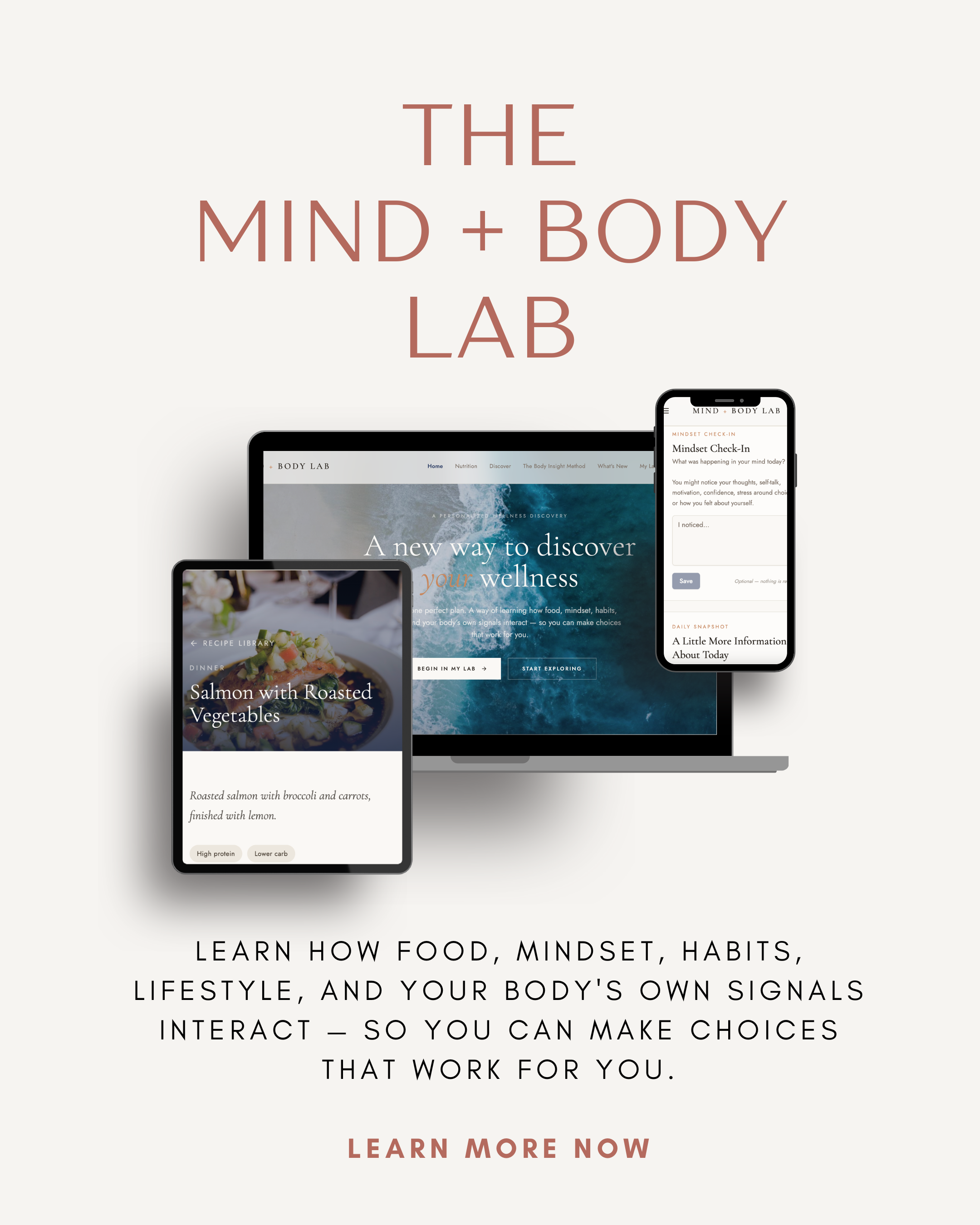
Mind-Body Lab - A guided wellness membership where you'll learn, practice, and grow with monthly education, challenges, and practical wellness tools.
Personalized Wellness Coaching - One-on-one coaching and a personalized plan designed around your body, goals, and lifestyle.
THE MIND + BODY LAB - SAY HELLO TO A NEW WAY TO APPROACH YOUR WELLNESS
A way of learning how food, mindset, habits, lifestyle, and your body's own signals interact — so you can make choices that work for you.
Includes:
Nutrition Pathways (Mediterranean, High Protein, GLP-1 & More - recipes, meal plans & action steps)
Discovery - tools & educations to learn and experiment with. Enjoy topics from mindset (identity, self-talk, limiting beliefs, perfectionism), self-care, habits and motivation to nutrition and eating behaviors.
The Body Insight Method - Learn how to tune into your body & lifestyle to create a wellness plan that works for you.
What’s New (interactive) - A space for our coaches to post weekly topics, reflective thoughts, monthly challenges and more. This is also a place for interaction. You can comment and ask questions to learn more!
My Lab (intuitive + interactive) - Your personal space to practice what you’re learning. Check in, reflect and notice what you’re learning and what’s working (or what isn’t). Let the lab provide helpful tips and pattern recognition to support your wellness & mindset goals.
Get The Mind + Body Lab Today!