




5 Blood Sugar Management Hacks to Boost Energy & Balance Your Health
/
Blood sugar balance affects so much more than diabetes risk. It influences your energy, cravings, mood, focus, sleep, hunger levels, inflammation, and even how you age.
And the tricky part? Blood sugar imbalances don’t always look dramatic. Sometimes they show up as afternoon crashes, constant snacking, brain fog, irritability, waking up tired, or feeling hungry shortly after eating.
The good news is that improving blood sugar doesn’t require perfection or an extreme diet. In fact, some of the most effective strategies are also the simplest.
This is about building meals and habits that help your body feel more stable, energized, and supported throughout the day.
In this post, we’ll walk through:
• Why blood sugar balance matters for overall wellness
• Signs your blood sugar may need more support
• Common habits that can lead to energy crashes and cravings
• 5 realistic blood sugar hacks that actually fit into daily life
• Simple ways to start implementing these habits one step at a time
Remember: you do not need to overhaul your entire lifestyle overnight. Start with one strategy, practice it consistently, and build from there.
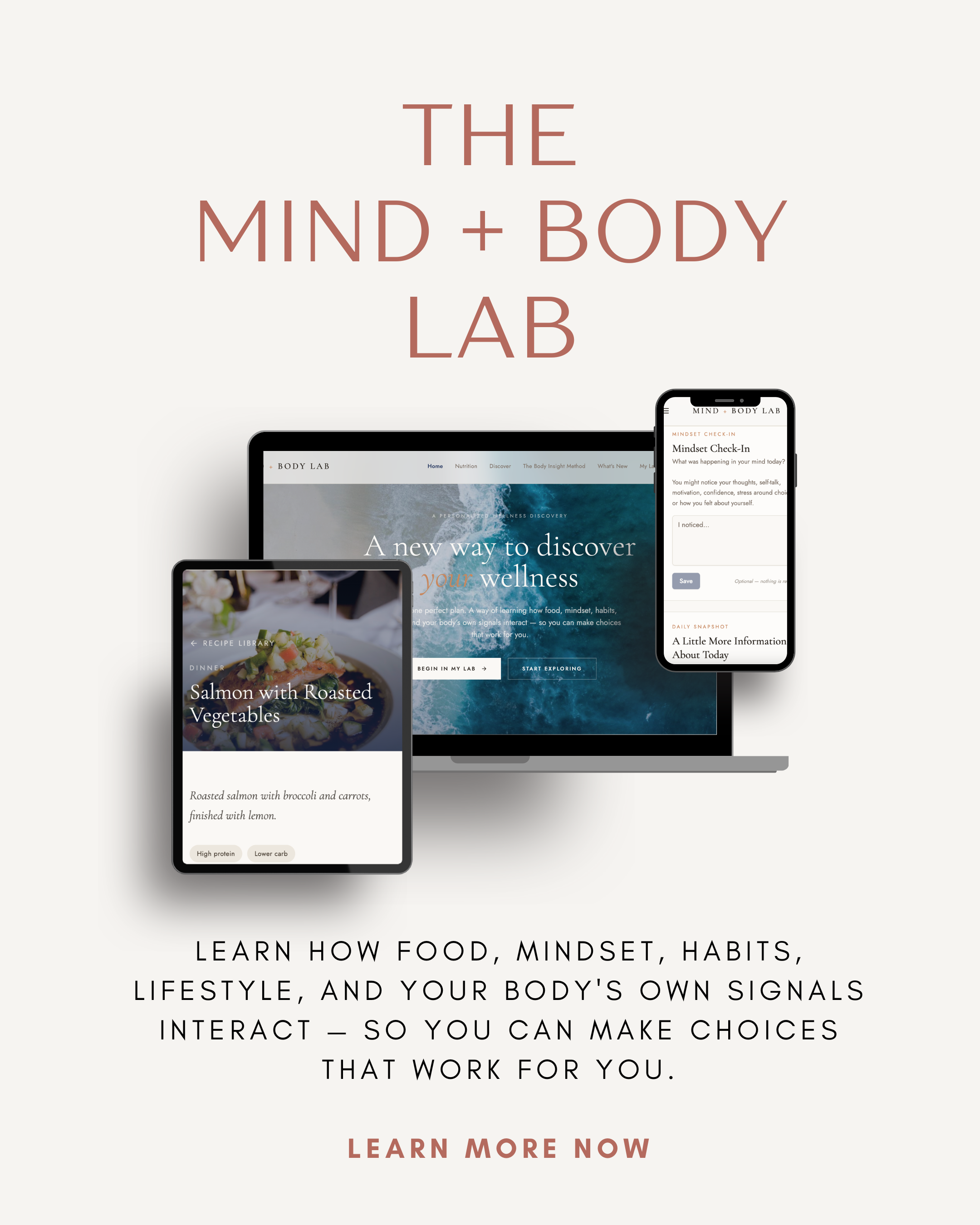
→ If you want a system that walks you through how to build a wellness plan unique for you, we’ve also created The Mind + Body Lab, but let’s dive into the info in this post first.
Why Is Blood Sugar Balance Important?
When blood sugar is more balanced, most people notice they simply feel better.
They often experience:
• More steady energy throughout the day
• Fewer cravings and less “food noise”
• Better focus and concentration
• Improved mood stability
• Less overeating and grazing
• Better workout recovery
• More consistent hunger cues
On the flip side, blood sugar spikes and crashes can leave you feeling like you’re constantly chasing energy — reaching for caffeine, sugar, snacks, or larger portions just to feel “normal” again.
This is why blood sugar balance can be such a powerful wellness tool. It’s not about being perfect with food. It’s about creating more stability for your body.
What Leads to Dysregulated Blood Sugar?
Blood sugar imbalances don’t happen overnight — they’re usually the result of daily patterns that add up. Here are some common contributors:
Too many calories — consistently eating in excess leads to higher blood sugar and more fat storage.
Too many refined carbs and sugar — pastries, soda, white bread, and processed snacks cause rapid spikes and crashes.
Skipping protein and healthy fats — meals built mostly from carbs lack the balance needed to slow absorption.
Sedentary lifestyle — little movement means glucose lingers in the bloodstream instead of being used for fuel.
Poor sleep and high stress — both increase cortisol, a hormone that disrupts insulin sensitivity.
Mindless eating and large portions — eating past fullness can overwhelm the body’s ability to process glucose efficiently.
The good news? With awareness and a few targeted strategies, you can take control and bring your blood sugar back into balance.
What you eat matters. → Try The Body Insight Method to get on the right track and understand what works for your body and lifestyle.
Signs Your Blood Sugar May Be Out of Balance
Your body will often give you clues that blood sugar is out of control. Some signs include:
Feeling hungry soon after meals
Getting sleepy after big meals or meals high in carbs
Energy highs and lows throughout the day
Mood swings or irritability
Excess thirst
Strong sugar or carb cravings
Difficulty focusing
If these feel familiar, it may be time to start making small, intentional changes to rebalance your blood sugar.
1. Walk After Meals
One of the simplest blood sugar tools is also one of the most underrated: movement after eating.
A short walk after meals helps your muscles use glucose for energy instead of allowing it to sit in the bloodstream. It can also support digestion, energy levels, and reduce that sluggish “food coma” feeling many people experience after heavier meals.
The best part? It does not need to be intense.
Practical ways to start:
• Take a 5–10 minute walk after dinner
• Walk while taking a phone call
• Do light housework after meals
• Walk the dog after eating
• Pace around your home if you can’t get outside
Coach’s note: Start with ONE meal per day. Dinner is often the easiest place to build this habit consistently.
2. Build Meals Around Protein First
Protein helps slow digestion, stabilize energy, support muscle mass, and increase fullness after meals. Many people struggling with energy crashes or cravings simply are not eating enough protein consistently throughout the day.
Instead of asking, “What should I eat?” start asking:
“Where is my protein coming from?”
That one question can completely change how balanced your meals feel.
Easy protein options:
• Eggs
• Greek yogurt
• Cottage cheese
• Chicken or turkey
• Tuna or salmon
• Protein smoothies
• Tofu or edamame
• Protein pasta or higher-protein wraps
Simple implementation tip:
You do not need to overhaul every meal overnight. Start with breakfast.
Adding protein to breakfast alone can improve energy, fullness, and cravings throughout the entire day.
3. Pair Carbs With Protein or Healthy Fat
Carbohydrates are not the enemy. In fact, carbs provide important energy for your body and brain. The goal isn’t to fear carbs — it’s to build meals and snacks in a way that helps you feel more balanced and satisfied.
When carbohydrates are eaten completely on their own, they tend to digest more quickly, which can lead to sharper blood sugar spikes followed by crashes in energy and hunger. Pairing carbs with protein or healthy fats helps slow digestion and creates steadier energy.
This also tends to help with:
• Cravings
• Feeling hungry shortly after eating
• Afternoon energy crashes
• Over-snacking later in the day
• Feeling more satisfied after meals
Easy examples of balanced pairings:
• Apple + peanut butter
• Berries + Greek yogurt
• Toast + eggs
• Crackers + tuna salad
• Banana + protein shake
• Rice + chicken + avocado
• Dessert after a balanced meal instead of by itself
Coach’s note: You do not need to eliminate your favorite foods to support blood sugar. Often, it’s simply about building more balance around them.
4. Don’t Forget Healthy Fats
Healthy fats are one of the biggest missing pieces in many meals — especially when people are trying to “eat healthy” or lose weight.
But fat plays an important role in blood sugar balance, satisfaction, hormone health, and nutrient absorption. It also helps meals feel more enjoyable and filling, which can reduce the constant urge to snack or keep searching for something “more” after eating.
Healthy fats help slow digestion, which supports steadier energy and fullness throughout the day.
Some simple healthy fat options include:
• Avocado
• Olive oil
• Nuts and seeds
• Nut butters
• Salmon
• Olives
• Chia or flax seeds
• Tahini
Simple ways to add healthy fats:
• Add avocado to eggs or bowls
• Drizzle olive oil on vegetables or salads
• Sprinkle nuts or seeds onto yogurt or oatmeal
• Pair fruit with nut butter
• Add chia seeds to smoothies
Coach’s note: Satisfaction matters. Meals that leave you physically and mentally satisfied are often much easier to stay consistent with long term.
5. Pay Attention to Portions & Satisfaction
Blood sugar balance is not just about what you eat — it’s also about how much, how quickly, and how mindfully you eat.
Large meals, distracted eating, or eating far past fullness can make energy levels feel more unstable and leave you feeling sluggish afterward.
This doesn’t mean you need to obsess over calories or portions. Instead, focus on building meals that help you feel comfortably satisfied rather than overly full.
A few simple habits can make a big difference:
• Slow down while eating
• Sit down for meals when possible
• Start with protein and vegetables first
• Pause halfway through meals and check in with fullness
• Notice how different portions make you feel afterward
One helpful question to ask yourself:
“Do I feel nourished and satisfied — or stuffed and uncomfortable?”
Coach’s note: Many people have spent years disconnected from their hunger and fullness cues because of dieting, stress, or busy schedules. Learning to tune back into your body is a skill that develops over time.
Bonus: Build a Balanced Blood Sugar Friendly Meal
A simple formula:
Protein + Fiber + Healthy Fat + Smart Carb
Examples:
Eggs + avocado + berries + sourdough
Chicken + roasted vegetables + olive oil + quinoa
Greek yogurt + chia seeds + berries + walnuts
Things to think about:
no need to be perfect
take one step towards building better meals for yourself
meals don’t need to look “healthy”, they just need to work for you
focus on balance and consistency over anything else
Start Small: How to Start Without Overcomplicating It
You do not need to master every blood sugar strategy at once.
Start by choosing ONE habit that feels realistic right now.
Maybe that’s:
• Adding protein to breakfast
• Taking a short walk after dinner
• Pairing snacks with protein
• Drinking more water
• Eating more consistently throughout the day
Practice that one habit for a week or two before layering on something new.
This is how sustainable wellness habits are built — not through perfection, but through small actions repeated consistently over time.
Learn Your Body
The most important thing to remember is that you are unique. There’s no one-size-fits-all formula for blood sugar balance. What works well for one person may not work as well for someone else — and that’s completely normal.
This is why learning your body matters.
Your body is constantly giving you feedback. The goal is to start paying attention to those cues instead of pushing through them or ignoring them.
Some signs your body may need more support with blood sugar balance include:
• Feeling shaky, tired, or irritable between meals
• Crashing in energy in the afternoon
• Constant cravings for sugar or carbs
• Feeling overly full or sluggish after eating
• Waking up tired even after sleeping
• Feeling hungry shortly after meals
• Brain fog or difficulty concentrating
• Needing caffeine or sugar to keep going throughout the day
Instead of viewing these as failures, view them as information.
For example:
• If you’re starving an hour after breakfast, you may need more protein or healthy fats.
• If you crash after lunch, your meal may have been too carb-heavy without enough balance.
• If you constantly crave sugar at night, your body may not be getting enough nourishment earlier in the day.
• If large meals make you feel exhausted, smaller balanced meals may work better for you.
This is where awareness becomes powerful.
You do not need to eat perfectly. You simply need to start noticing patterns and making small adjustments over time.
Try experimenting with:
• More protein at breakfast
• Walking after meals
• Pairing carbs with protein
• Eating more consistently throughout the day
• Improving hydration and sleep
• Slowing down while eating
Then ask yourself:
“How do I actually feel when I eat this way?”
The more connected you become to your body’s signals, the easier it becomes to build habits that truly support your energy, wellness, and long-term health.
Dive In Deeper: EXPLORE More
Ready to jump into more? Here are a few resources to keep the momentum going:
📌 Related Posts
Ways To Learn & Grow
Body Insights Method - Learn how to work with your body and lifestyle to create sustainable wellness from the inside out.
Mind-Body Lab - A guided wellness membership where you'll learn, practice, and grow with monthly education, challenges, and practical wellness tools.
Personalized Wellness Coaching - One-on-one coaching and a personalized plan designed around your body, goals, and lifestyle.
THE MIND + BODY LAB - SAY HELLO TO A NEW WAY TO APPROACH YOUR WELLNESS
A way of learning how food, mindset, habits, lifestyle, and your body's own signals interact — so you can make choices that work for you.
Includes:
Nutrition Pathways (Mediterranean, High Protein, GLP-1 & More - recipes, meal plans & action steps)
Discovery - tools & educations to learn and experiment with. Enjoy topics from mindset (identity, self-talk, limiting beliefs, perfectionism), self-care, habits and motivation to nutrition and eating behaviors.
The Body Insight Method - Learn how to tune into your body & lifestyle to create a wellness plan that works for you.
What’s New (interactive) - A space for our coaches to post weekly topics, reflective thoughts, monthly challenges and more. This is also a place for interaction. You can comment and ask questions to learn more!
My Lab (intuitive + interactive) - Your personal space to practice what you’re learning. Check in, reflect and notice what you’re learning and what’s working (or what isn’t). Let the lab provide helpful tips and pattern recognition to support your wellness & mindset goals.
Get The Mind + Body Lab Today!