


Plant Based GLP-1 Recipes: Nourishing Meals to Support Muscle Mass & Overall Wellness
/
If you’re plant-based and navigating a GLP-1 medication, you’re not alone—and you’re not doing anything wrong by needing to be a bit more intentional.
GLP-1 medications can be incredibly helpful tools, but they also change appetite, fullness cues, and sometimes tolerance for larger meals. When you’re eating plant-based, that can bring up very real questions: Am I getting enough protein? Am I supporting my muscle mass? Why do some foods suddenly feel harder to eat?
The good news? A plant-based GLP-1 journey is absolutely doable—and it can be deeply nourishing when approached with care, flexibility, and the right nutrition strategies.
This post is designed to meet you where you are. The recipes below focus on plant-based protein, gentle digestion, and balanced energy—without pressure, perfection, or restriction.
Nutrition Guidelines for a GLP-1 Journey (Plant-Based Edition)
While every body responds differently, there are a few guiding principles that tend to support overall wellness while using a GLP-1 medication:
Prioritize protein at every meal. Preserving lean muscle mass is essential, especially when appetite is lower.
Choose nutrient-dense foods first. Smaller portions mean every bite matters more.
Balance protein with fiber and healthy fats. This supports blood sugar, digestion, and satiety.
Honor digestion and tolerance. Some high-fiber foods may feel better cooked, blended, or softened.
Release the pressure to eat “big” meals. Smaller, balanced meals and snacks often work best.
For those eating plant-based, this simply means being more intentional with protein sources—not restrictive, just thoughtful.
Yes, Plant-Based Protein on GLP-1 Is Totally Possible
Protein doesn’t have to come from animal sources to be effective. Plant-based options like tofu, edamame, chickpea pasta, hemp seeds, chia seeds, and protein powders can add up quickly—especially when layered strategically throughout the day.
The recipes below are designed to help you do exactly that, while still enjoying food that feels comforting, approachable, and satisfying.
→ Want to go beyond the basics and dive further into wellness? Explore The Mind + Body Lab and discover the tools, guidance, and support to help you create lasting wellness.
Plant-Based GLP-1 Friendly Recipes
Raspberry & Almond Oatmeal
3 Servings
281 calories | 17g protein per serving
Ingredients
3 cups unsweetened almond milk
1 1/2 cups rolled oats
1/3 cup vanilla protein powder
3/4 cup raspberries
3 tbsp unsweetened coconut flakes
1 tbsp cinnamon
Directions
Bring the almond milk to a boil in a saucepan. Add the oats and protein powder.
Reduce to a simmer and cook for about 5 minutes, stirring occasionally, until tender.
Transfer to bowls and top with raspberries, coconut flakes, and cinnamon.
Raspberry Chia Protein Pudding
2 Servings
228 calories | 15g protein per serving
Ingredients
1/4 cup chia seeds
1 cup unsweetened almond milk
1/4 cup vanilla protein powder
3/4 cup raspberries, divided
2 tbsp unsweetened coconut flakes
Directions
Whisk chia seeds, almond milk, and protein powder until fully combined.
Refrigerate for at least 20 minutes or overnight.
Mash half the raspberries and layer over the pudding with remaining berries and coconut.
Pear & Spinach Protein Smoothie
1 Serving
345 calories | 27g protein
Ingredients
1 1/4 cups unsweetened almond milk
1 pear, cored and chopped
1 1/2 cups baby spinach
1/4 cup vanilla protein powder
1 tbsp chia seeds
1 tbsp hemp seeds
Directions
Blend all ingredients until smooth and creamy. Serve immediately.
Recipes Continued
Chickpea & Edamame Quinoa Salad
2 Servings
322 calories | 14g protein per serving
Ingredients
1/3 cup quinoa, dry
1/2 cup cooked chickpeas
1/2 cup thawed edamame
1/2 cucumber, chopped
1/4 cup cilantro, chopped
1 tbsp hemp seeds
1 tbsp apple cider vinegar
1 tbsp extra virgin olive oil
1/2 tsp garlic powder
Sea salt and black pepper
Directions
Cook quinoa according to package directions and let cool slightly.
Combine remaining ingredients in a bowl.
Add quinoa, toss well, and divide into servings.
Curry Tofu & Spinach Chickpea Pasta
2 Servings
520 calories | 34g protein per serving
Ingredients
4 oz chickpea pasta, dry
2 tbsp extra virgin olive oil, divided
12 oz extra-firm tofu, pressed and crumbled
1 tsp garlic powder
1 tsp curry powder
Sea salt and black pepper
1 1/2 cups baby spinach
1/3 cup unsweetened almond milk
1/3 cup cilantro, plus more for garnish
2 tbsp almonds, toasted and chopped
Directions
Cook pasta to al dente.
Heat half the oil and cook tofu with spices until golden.
Add spinach and almond milk and simmer briefly.
Toss with pasta and cilantro. Top with almonds.
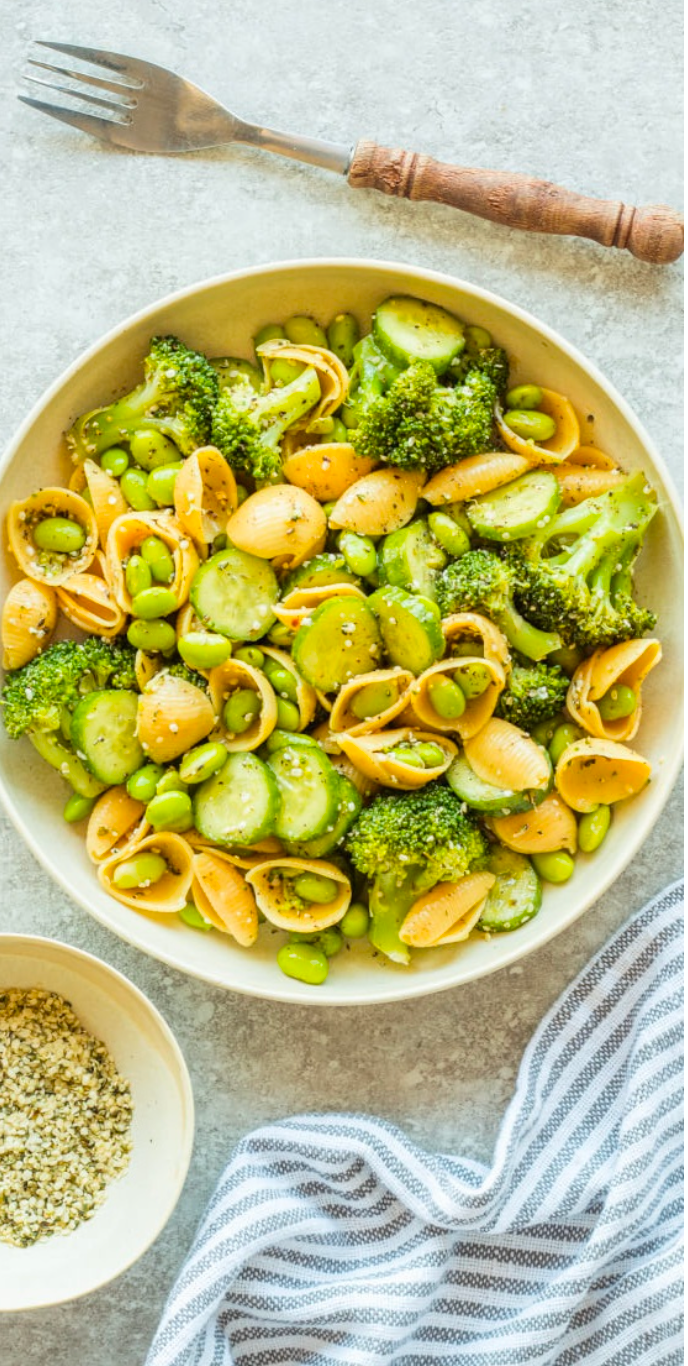
Edamame, Broccoli & Chickpea Pasta Salad
2 Servings
475 calories | 29g protein per serving
Ingredients
4 oz chickpea pasta, dry
1 cup broccoli florets
2 tbsp extra virgin olive oil
1 tbsp apple cider vinegar
1 tsp Italian seasoning
1 tbsp hemp seeds
1 tbsp nutritional yeast
1 cup thawed edamame
1/2 cucumber, sliced
Sea salt and black pepper
Directions
Cook pasta, adding broccoli during the last 2 minutes.
Toss with remaining ingredients and season to taste.
Sample 2-Day Plant-Based GLP-1 Meal Plan
A meal plan using the recipes above to follow should you want a little more structure or guidance.
Day 1
Breakfast: Raspberry & Almond Oatmeal
Lunch: Chickpea & Edamame Quinoa Salad
Dinner: Curry Tofu & Spinach Chickpea Pasta
Snack (optional): Raspberry Chia Protein Pudding
Day 2
Breakfast: Pear & Spinach Protein Smoothie
Lunch: Edamame, Broccoli & Chickpea Pasta Salad
Dinner: Leftover Curry Tofu Pasta or Quinoa Salad
Snack (optional): Chia pudding or smoothie half-portion
Simple Modifications to Make These Recipes Your Own
Adjust protein portions based on your needs and appetite.
Use your preferred plant-based protein powder (pea, rice, soy, or blends).
Blend or cook vegetables if digestion feels sensitive.
Reduce portions and eat more frequently if fullness comes on quickly.
Swap fats intentionally—use olive oil, avocado, nuts, or seeds as needed.
Honor what feels good. Your body’s feedback matters more than perfection.
GLP-1 support isn’t about eating less—it’s about eating well, intentionally, and compassionately. Plant-based living can absolutely support strength, muscle preservation, and long-term wellness when done with care.
Enjoy the recipes and let us know your favorites!
Additional Reading & Tools To Explore
There’s more to learn and discover!
📌 Related Posts
Ways To Learn & Grow
Body Insights Method - Learn how to work with your body and lifestyle to create sustainable wellness from the inside out.
Mind-Body Lab - A guided wellness membership where you'll learn, practice, and grow with monthly education, challenges, and practical wellness tools.
Personalized Wellness Coaching - One-on-one coaching and a personalized plan designed around your body, goals, and lifestyle.
THE MIND + BODY LAB - SAY HELLO TO A NEW WAY TO APPROACH YOUR WELLNESS
A way of learning how food, mindset, habits, lifestyle, and your body's own signals interact — so you can make choices that work for you.
Includes:
Nutrition Pathways (Mediterranean, High Protein, GLP-1 & More - recipes, meal plans & action steps)
Discovery - tools & educations to learn and experiment with. Enjoy topics from mindset (identity, self-talk, limiting beliefs, perfectionism), self-care, habits and motivation to nutrition and eating behaviors.
The Body Insight Method - Learn how to tune into your body & lifestyle to create a wellness plan that works for you.
What’s New (interactive) - A space for our coaches to post weekly topics, reflective thoughts, monthly challenges and more. This is also a place for interaction. You can comment and ask questions to learn more!
My Lab (intuitive + interactive) - Your personal space to practice what you’re learning. Check in, reflect and notice what you’re learning and what’s working (or what isn’t). Let the lab provide helpful tips and pattern recognition to support your wellness & mindset goals.
Get The Mind + Body Lab Today!