


Cultivating Self-Compassion: A Key to Transforming Your Mindset & Your Wellness
/
Self-Compassion: One of the Most Overlooked Tools for Lasting Wellness
If you've ever found yourself saying...
"I blew it."
"I'll never stick with this."
"Why can't I just get it together?"
...you're not alone.
As a health coach, I hear versions of these thoughts almost every day. And if I'm being honest, I've had them too.
One thing I've learned over the years is this: The way you speak to yourself matters.
Not just because it affects how you feel—but because it affects what you do next.
When we're constantly criticizing ourselves, we're more likely to give up after one off day, throw in the towel after a missed workout, or decide we've "failed" because the scale didn't move this week.
Treating ourselves harshly has become the new norm. But when we respond with self-compassion instead?
We tend to regroup. We can make a small adjustment. We keep going.
That's why self-compassion isn’t just a mindset tool. It’s interwoven into every facet of life.
It helps you build the consistency and belief in yourself that leads to real, sustainable change.
What Is Self-Compassion?
If you’re not sure what self-compassion is, it’s the practice of treating yourself with the same kindness, patience, and understanding that you would offer someone you care about.
It doesn't mean lowering your standards. It doesn't mean making excuses. And it definitely doesn't mean giving up on your goals.
Instead, it means supporting yourself through the process of reaching them.
The truth is, everyone has setbacks. Everyone has days where motivation disappears.
Everyone misses workouts, eats more than planned, or has weeks where life simply gets in the way.
Self-compassion reminds us that those moments aren't proof that we're failing.
They're simply part of being human.
Why Self-Compassion Matters for Your Health and Wellness
This is where I think self-compassion often gets misunderstood. Many people assume being hard on themselves will keep them motivated.
In reality, I often see the opposite. Harsh self-criticism creates guilt. Guilt often leads to giving up. Giving up makes it harder to build consistency.
And consistency—not perfection—is what creates results that actually last. When you practice self-compassion, you're much more likely to ask:
"What can I learn from this?"
instead of
"What's wrong with me?"
That single shift changes everything.
Three Principles of Self-Compassion
Self-kindness
Speak to yourself with encouragement instead of criticism.
You can be honest without being cruel.
Instead of:
"I'm so lazy."
Try:
"Today didn't go the way I hoped. What's one thing I can do differently tomorrow?"
Remember Your Common Humanity
Every single person struggles.
Every person has seasons where healthy habits feel easier and seasons where they feel harder.
You are not behind and you are not broken.
You're simply navigating life like everyone else.
Practice Awareness Without Judgment
One of the biggest parts of the Body Insight Method is learning to notice before reacting.
Notice your thoughts.
Notice your emotions.
Notice your behaviors.
Not to judge them—but to understand them.
Awareness creates understanding and choice. And choice creates change.
7 Ways to Practice More Self-Compassion
1. Notice your inner dialogue.
Would you say those words to someone you love?
If not, they're probably not serving you either.
2. Separate the behavior from your identity.
Missing a workout doesn't make you lazy.
Eating dessert doesn't make you unhealthy.
One choice doesn't define who you are.
3. Get curious instead of critical.
Instead of asking,
"Why did I mess up?"
Ask,
"What was happening today?"
Were you tired?
Stressed?
Overwhelmed?
Busy?
Your answer often provides useful information—not evidence that you've failed.
4. Celebrate progress that's not on the scale.
Did you drink more water?
Get outside?
Sleep better?
Cook dinner at home?
Speak more kindly to yourself?
Those count too.
5. Give yourself permission to adjust.
Sometimes the healthiest thing you can do isn't push harder.
It's change the plan.
Your wellness routine should support your life—not fight against it.
6. Practice small moments of kindness.
Take a walk.
Stretch.
Call a friend.
Read.
Sit outside.
Drink enough water.
These aren't rewards.
They're ways of caring for yourself today.
7. Remember that consistency beats perfection.
Your body isn't asking you to be perfect.
It's asking you to keep showing up.
Again and again.
What Self-Compassion Really Looks Like
Self-compassion isn't coddling yourself. It also isn’t saying, "It doesn't matter."
It's saying, "It matters, and I'm still worthy of giving myself kindness while I figure it out."
It's acknowledging that today wasn't your best day...without deciding tomorrow won't be better.
It’s giving yourself the grace to work through challenges and to make adaptations. That's a completely different mindset.
And over time, it creates completely different results.
Coach's Note
One of the things I remind my coaching clients most often is this: Your body is always responding to the actions you practice most consistently. And the actions you practice are often shaped by the way you think about yourself.
If every setback turns into self-criticism, it's easy to quit. But if every setback becomes information, it's much easier to adapt.
So the next time something doesn't go as planned, pause before judging yourself.
Ask:
"What is this experience teaching me?"
Maybe you needed more sleep.
Maybe you skipped lunch.
Maybe your schedule was unrealistic.
Or what if you're simply human and human things come up here and there.
Whatever the answer is, let it help you move forward instead of convincing you to stop.
More To Discover
Want to dive deeper? Here are a few resources to keep the momentum going:
📌 Related Posts
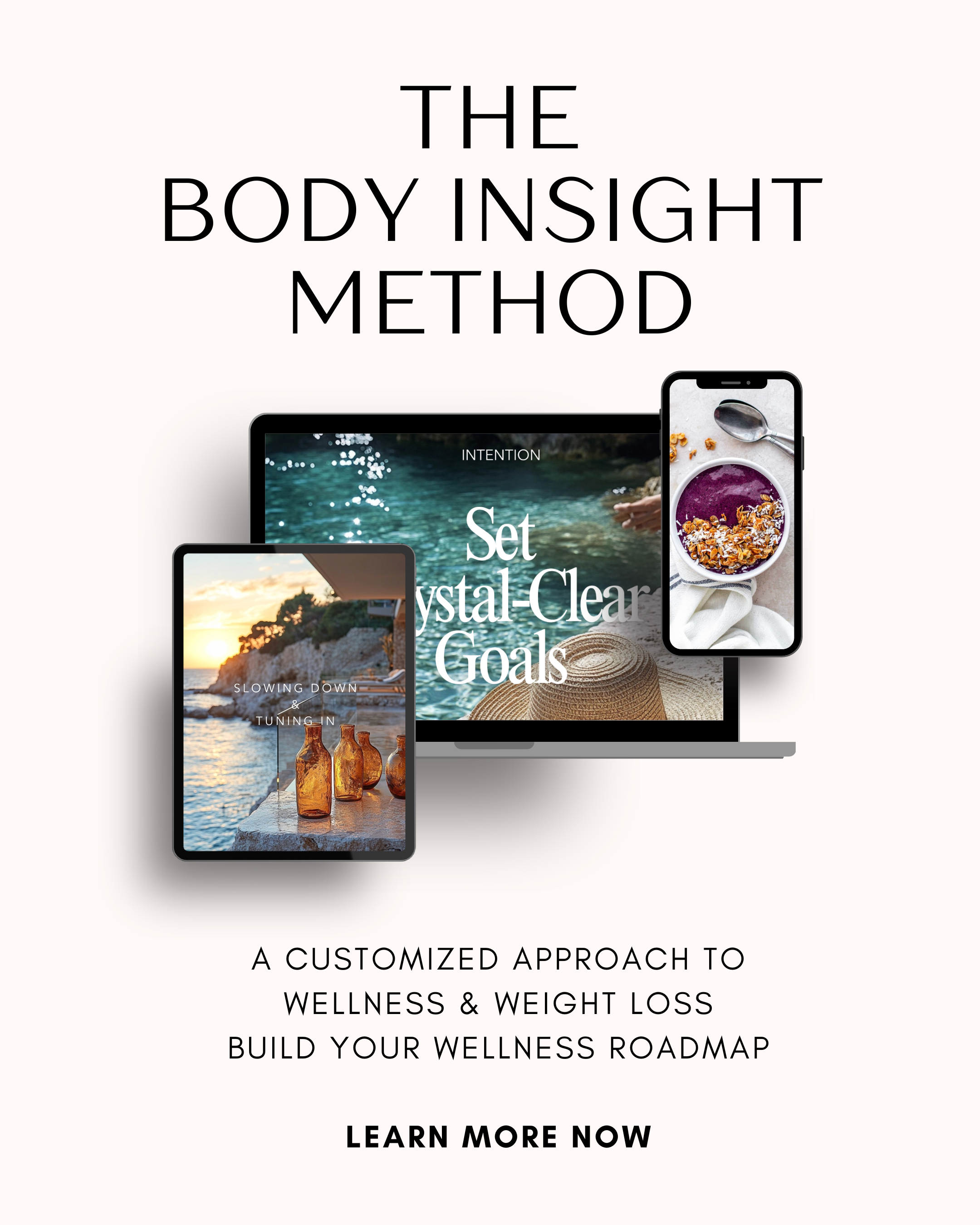
SAY HELLO TO CUSTOMIZED WELLNESS & WEIGHT LOSS WITH THE BODY INSIGHT METHOD
Real, lasting health isn't about following more rules or restrictions—it's about creating balanced wellness that's unique for your body & your lifestyle.
Whether you want to boost energy, improve overall health or lose weight — you’ll learn to notice your body's unique signals, understand what they're telling you, and create a personalized approach to wellness that fits your life.
Includes:
5 Learning Modules, 12 Week Guided Action Plan, Recipes, Meal Plans, Resources & Tracking Tools
3I Framework for Mindset & Goal Setting
Biofeedback & The 4P’s: Customize for Your Body & Your Lifestyle
The Health First Approach to Metabolism
Mindful & Intuitive Eating
The AIM Method: Awareness, Adaptation & Integration
12 Week Guided Action Plan: Build Your Wellness Roadmap
Recipes & Meal Plans: 650+ Recipes & Meal Plans
Tools & Resources - Habit trackers, reflection exercises, and implementation guides.
Learn More Now: The Body Insight Method