




11 Mindset Shifts That Make Weight Loss Easier
/
We’re so conditioned to believe certain things about weight loss. The primary focus is calories in versus calories out combined with an approach that encompasses eating less and exercising more. The truth is that there’s more to it than that.
Weight loss isn’t just about what you eat or how often you exercise.
Those things matter, of course. But they’re only part of the equation.
The way you think about weight loss, the identity you hold about yourself, and the story you tell about what’s possible for you all influence the choices you make every day.
Your brain is constantly filtering information and reinforcing patterns. When you change the way you think and talk about your goals, you can start working with your brain instead of against it.
There’s real science behind this.
Your brain has something called the Reticular Activating System (RAS), which filters the information you notice throughout the day. When you focus on something consistently, your brain starts spotting opportunities that support that focus.
Your default mode network also plays a role. This network becomes active when your mind is at rest, and it’s deeply connected to your sense of identity and the stories you tell about yourself.
Then there’s neuroplasticity, which simply means that your brain can change and rewire over time. The thoughts you repeat and the behaviors you practice literally strengthen certain neural pathways.
In other words, the way you think about weight loss matters because your brain learns from repetition.
The good news is that small mindset shifts can make healthy habits feel much more natural.
Here are 11 simple ways to start shifting the way you approach your goals. Let’s get into it ↓
1. Start telling yourself It Gets Easier
Your words are direct instructions for your brain.
If you constantly say things like “losing weight is so hard” or “nothing works for me,” your brain begins to treat those statements as facts.
Try shifting your thoughts to a gentler approach. And NO - you do not need to gaslight yourself.
Start saying things like:
“This is getting easier for me.”
“I’m learning what works for my body.”
“Healthy choices are becoming natural for me.”
This simple change helps your brain start looking for evidence that supports the new belief.
Inspiration: 100 Weight Loss Affirmations
2. Build on the things that already feel easy
Not every healthy habit has to feel like a struggle. In fact, when it comes to mindset and losing weight, accomplishing goals of any kind (no matter how small or big) helps to create momentum.
Pay attention to the things that already work for you. Maybe you enjoy walking, cooking simple meals, or starting your day with protein.
Instead of trying to overhaul everything at once, build momentum around the habits that already feel manageable.
Success compounds when you build on what’s working.
3. Visualize the end result
Spend a few minutes imagining the version of yourself who has already reached your goals.
What does your day look like?
How do you feel when you wake up in the morning?
How do you move through your routines?
What kind of energy do you have?
Visualization helps your brain rehearse the future you’re working toward. When your mind becomes familiar with that version of you, your choices begin to align with it more naturally.
4. Notice your wins every day
Your brain naturally pays more attention to problems than progress.
That’s why it’s important to intentionally notice what’s going well.
Maybe you:
made a balanced meal
went for a walk
stopped eating when you were satisfied
chose water instead of soda
Small wins matter because they reinforce the behaviors you want to repeat. Take a mental note at the end of the day. Journal your wins. However you decided to highlight what you ARE accomplishing is up to you - get creative and have fun with it.
5. Speak to yourself with respect
The way you talk to yourself shapes how you behave. Speak to yourself like you actually love, value and respect your own self!
Instead of criticizing yourself for what you haven’t done yet, start reinforcing the relationship you want with your body.
Try saying things like:
“I respect my body.”
“I take care of myself.”
“I make choices that support my health.”
Self-respect often creates more sustainable change than self-criticism.
6. Start enjoying taking care of your body
Healthy habits become much easier when they feel good.
Instead of thinking of food, movement, and rest as rules you have to follow, try viewing them as ways to treat your body well.
Cooking a nourishing meal, getting outside for a walk, or prioritizing sleep can all become forms of self-care.
Mindset Shift: Start viewing this as something you “get” to do vs something you have to do.
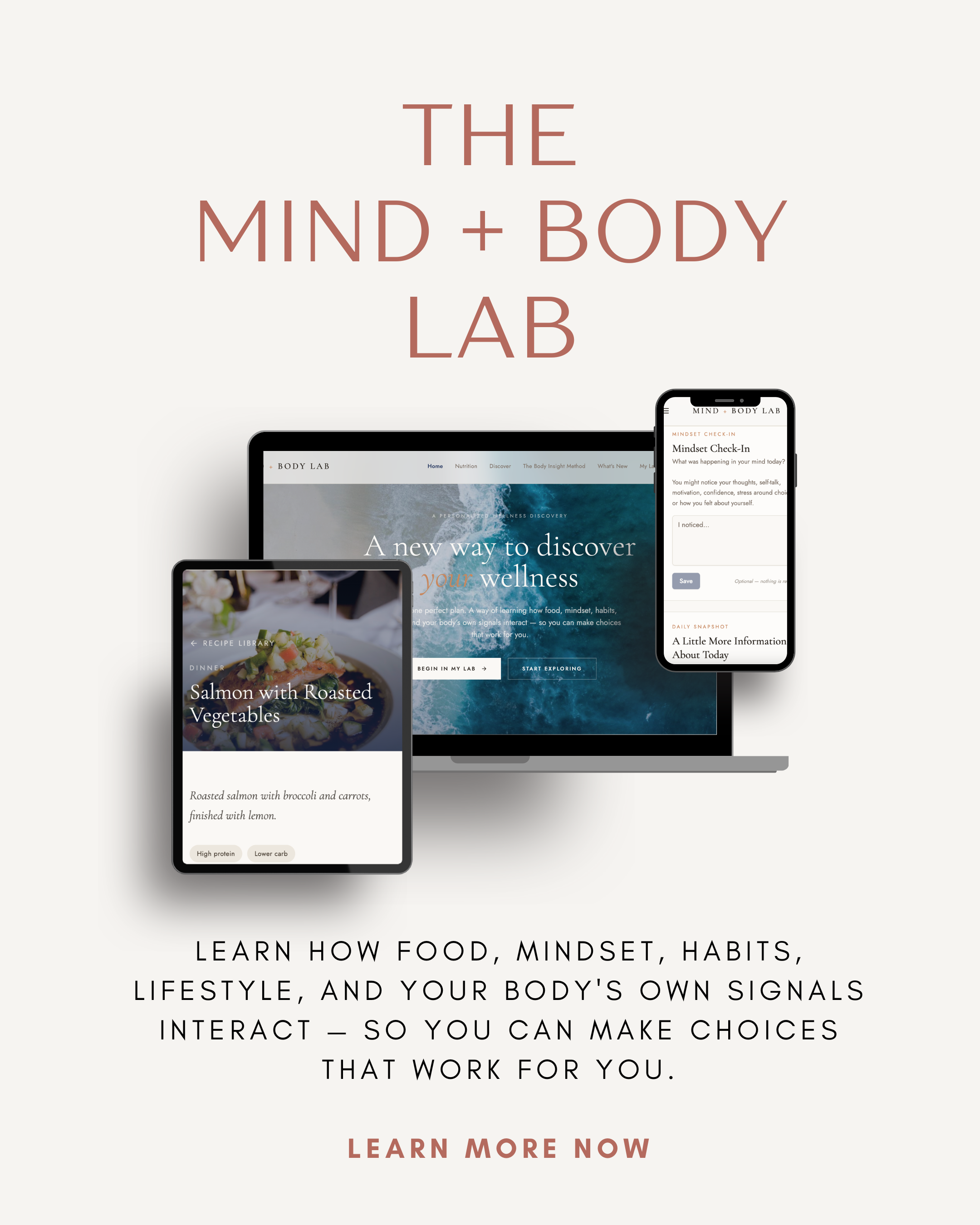
→ Ready to take your wellness journey further? Explore The Mind + Body Lab and discover the support that fits your goals—from guided learning and ongoing support to personalized coaching.

7. Make the process enjoyable
If your plan feels miserable, it probably won’t last.
Look for ways to make the process enjoyable:
try new recipes
walk with a friend
listen to a podcast while exercising
experiment with different workouts
When healthy habits are enjoyable, consistency becomes much easier.
Tools to Try:
8. Take one aligned action every day
Progress doesn’t require perfection.
It simply requires consistency.
Choose at least one action each day that aligns with your goals. It might be something small, like preparing a healthy meal or going for a short walk.
Those small actions add up over time and reinforce the identity of someone who takes care of themselves.
9. Mentally rehearse better responses
Slip-ups happen to everyone. They are a very normal part of the process.
Instead of getting stuck in frustration and staying in a thought loop of disappointment, try using mental rehearsal.
Think back to the situation and imagine how you would like to respond next time. If you were able to act out best case scenario, how would that situation have gone instead? Replay that in your mind. This helps your brain practice the behavior you want to develop.
Over time, that mental practice makes the new response easier in real life.
10. Get clear on who you are becoming
Long-term change usually happens when your identity shifts.
Instead of focusing only on the number on the scale, think about the type of person you want to become.
For example:
someone who prioritizes their health
someone who enjoys nourishing food
someone who moves their body regularly
When your identity shifts, your daily choices begin to follow naturally.
11. Surround yourself with supportive people
Your environment matters more than you might think.
When you’re around people who support your goals, healthy habits feel more normal and sustainable.
Support can come from friends, family, or communities that share similar values around health and wellness.
Having the right environment makes it easier to stay consistent over time.
Mind Body Moment
Coach’s Notes: Weight loss isn’t just a physical process. It’s also a mental one. If you’re continuously in the cycle of losing weight and never reaching your goals, it may not be a nutrition and fitness issue. It might require looking a little deeper at your identity, your beliefs, and how you navigate wellness on a daily basis.
When you begin shifting the way you think about yourself, your habits, and your goals, your brain starts working in your favor.
You don’t need to change everything overnight. One step at a time, one day at a time, one goal at a time.
Start with small shifts in how you think, speak, and act each day. Over time, those changes can lead to meaningful, lasting progress.
Practice & Take Action - the ONLY WAY to change is to take action and to do it consistently. Choose one mindset hack to try. Test it out for 1-2 weeks and then evaluate how it’s working for you. You can either adapt the practice, shelve it for later or toss it altogether and move on to the next tool.
Enjoy the process! - Margot
Share your comments or questions in the comment section!
Ways To Learn & Grow
Body Insights Method - Learn how to work with your body and lifestyle to create sustainable wellness from the inside out.
Mind-Body Lab - A guided wellness membership where you'll learn, practice, and grow with monthly education, challenges, and practical wellness tools.
Personalized Wellness Coaching - One-on-one coaching and a personalized plan designed around your body, goals, and lifestyle.
THE MIND + BODY LAB - SAY HELLO TO A NEW WAY TO APPROACH YOUR WELLNESS
A way of learning how food, mindset, habits, lifestyle, and your body's own signals interact — so you can make choices that work for you.
Includes:
Nutrition Pathways (Mediterranean, High Protein, GLP-1 & More - recipes, meal plans & action steps)
Discovery - tools & educations to learn and experiment with. Enjoy topics from mindset (identity, self-talk, limiting beliefs, perfectionism), self-care, habits and motivation to nutrition and eating behaviors.
The Body Insight Method - Learn how to tune into your body & lifestyle to create a wellness plan that works for you.
What’s New (interactive) - A space for our coaches to post weekly topics, reflective thoughts, monthly challenges and more. This is also a place for interaction. You can comment and ask questions to learn more!
My Lab (intuitive + interactive) - Your personal space to practice what you’re learning. Check in, reflect and notice what you’re learning and what’s working (or what isn’t). Let the lab provide helpful tips and pattern recognition to support your wellness & mindset goals.
Get The Mind + Body Lab Today!