




5 Easy Ways To Start Loving Yourself More
/
5 Ways to Love Yourself More: Simple Ways to Build a Healthier Relationship With Yourself
Loving yourself sounds simple, but it isn't always easy. Between the demands of everyday life, the expectations we place on ourselves, and the tendency to focus on what we could be doing better, it's easy to lose sight of the importance of taking care of ourselves along the way.
Self-love isn't about being happy with everything all the time or thinking you're perfect just as you are. It's about building a healthier relationship with yourself—one that includes recognizing your worth, respecting your needs, giving yourself room to grow, and treating yourself with the same understanding you'd offer someone you care about.
The good news is that it doesn't require a major life change. Small, intentional shifts in how you think, speak to yourself, and show up for yourself can make a difference. Here are five simple ways to start practicing more self-love in your everyday life.
→ Wellness is more than what you learn — it's what you do with it. Join The Mind + Body Lab to explore new ideas, connect with others, and start taking action.
1. Practice Gratitude, Including for Yourself
Gratitude is a way of paying attention to what you appreciate, and that includes recognizing the good in yourself. It's easy to focus on what you haven't accomplished, what you'd like to change, or where you think you fall short. But how often do you stop to acknowledge your strengths, the progress you've made, or the ways you show up for yourself and others?
Practicing gratitude can help you develop a more balanced perspective. It doesn't mean overlooking the things you'd like to improve. It means making room to recognize what's already there, too.
How to practice it:
Keep a gratitude journal: Write down three things you're grateful for each day. Include something about yourself, such as a quality you appreciate, a decision you're proud of, or something you handled well.
Notice the small things: Pay attention to everyday moments you might otherwise overlook, whether it's a beautiful sunset, a good conversation, or having time to do something you enjoy.
Acknowledge your progress: Instead of focusing only on what's left to accomplish, take a moment to recognize how far you've come and what you're learning along the way.
2. Pay Attention to Your Self-Talk
The way you talk to yourself matters. Your internal dialogue can influence how you see yourself, how you respond to challenges, and whether you feel encouraged or discouraged when things don't go as planned.
We all have moments when we're critical of ourselves. The goal isn't to eliminate every negative thought or force yourself to think positively all the time. It's to become more aware of the way you're speaking to yourself and consider whether there's another perspective worth practicing.
How to practice it:
Notice your internal dialogue: Pay attention to what you say to yourself when you make a mistake, face a challenge, or feel disappointed. Are you being constructive, or are you making the situation harder with unnecessary criticism?
Practice a different perspective: When you catch yourself thinking, "I can't do this," consider whether a more helpful thought might be, "I'm still learning how to do this." You aren't pretending the challenge isn't there; you're giving yourself another way to approach it.
Treat yourself like someone you care about: Think about how you'd respond to a friend who was struggling with the same situation. You'd probably offer some understanding, encouragement, and perspective. Practice extending that same support to yourself.
3. Set Boundaries That Support Your Well-Being
Self-love isn't just about how you feel about yourself. It's also reflected in the choices you make and what you allow into your everyday life. Sometimes that means recognizing when you're overcommitted, when something is taking more energy than you have to give, or when you need to make a little more room for yourself.
Boundaries help you protect your time, energy, and priorities. They aren't necessarily about keeping people out. They're about being intentional with what you say yes to and recognizing when saying no is the better choice.
How to practice it:
Get clear on what matters to you: Think about your priorities and what you need to feel supported, respected, and balanced. This might include more downtime, time with family, or a better separation between work and personal life.
Notice where you need a boundary: Are you regularly saying yes when you really want to say no? Are you taking on responsibilities that leave you feeling overwhelmed? Start by noticing where a change might help.
Communicate your needs: Practice being clear and respectful when expressing what works for you. You don't have to overexplain every decision or feel guilty for making choices that support your well-being.
4. Make Time for Things You Enjoy
It's easy to let the responsibilities of everyday life take up most of your time. Work, family, errands, and everything else on your to-do list can leave little room for the things you genuinely enjoy. But making time for yourself isn't something you have to earn after everything else is done.
Doing things that bring you joy, help you feel connected, or simply give you a break from your usual routine is part of taking care of yourself. And enjoyment doesn't have to be productive to be worthwhile.
How to practice it:
Make room for something you enjoy: Set aside time for activities that make you feel good, whether that's reading, gardening, going for a walk, exercising, cooking, or spending time outdoors.
Stay curious: Try something new or revisit an interest you've put aside. You might discover something you enjoy or simply appreciate having a new experience.
Spend time with people who lift you up: Make an effort to stay connected with the people who make you laugh, encourage you, and help you feel like yourself. Sometimes a phone call or a quick coffee is all it takes to reconnect.
5. Surround Yourself With Supportive People and Environments
The people you spend time with and the environments you're part of can influence how you feel, think, and show up in your everyday life. Supportive relationships can encourage you, offer perspective, and remind you that you don't have to figure everything out on your own.
This is also about being intentional with where you invest your time and energy. Pay attention to the people, places, and communities where you feel comfortable being yourself, encouraged to grow, and genuinely supported.
How to practice it:
Reflect on your relationships: Consider how you feel after spending time with the people in your life. Do you feel supported and appreciated? Are there relationships that consistently leave you feeling drained?
Find your community: Look for groups, activities, or communities where you can connect with people who share your interests or values. This could be a fitness class, book club, volunteer organization, or online community.
Spend more time where you feel supported: Make an effort to build on the relationships and experiences that bring something positive into your life. You don't have to make dramatic changes overnight. Start by being more intentional about where you put your time and attention.
Building a More Loving Relationship With Yourself
Learning to love yourself more isn't about changing everything you think or do overnight. It's an ongoing practice that shows up in the way you treat yourself, the choices you make, and how you respond to the ups and downs of everyday life.
Start by noticing where you could offer yourself a little more encouragement, make more room for what you enjoy, or make a choice that better supports your needs. You don't have to get it right every time. The goal is to build a relationship with yourself that leaves room for both growth and acceptance.
And remember, you don't have to wait until you've reached a certain goal, changed something about yourself, or figured everything out to treat yourself with care and respect. You deserve that now.
→ Understanding is the first step. The real magic happens when you put what you learn into practice. Explore The Mind + Body Lab.
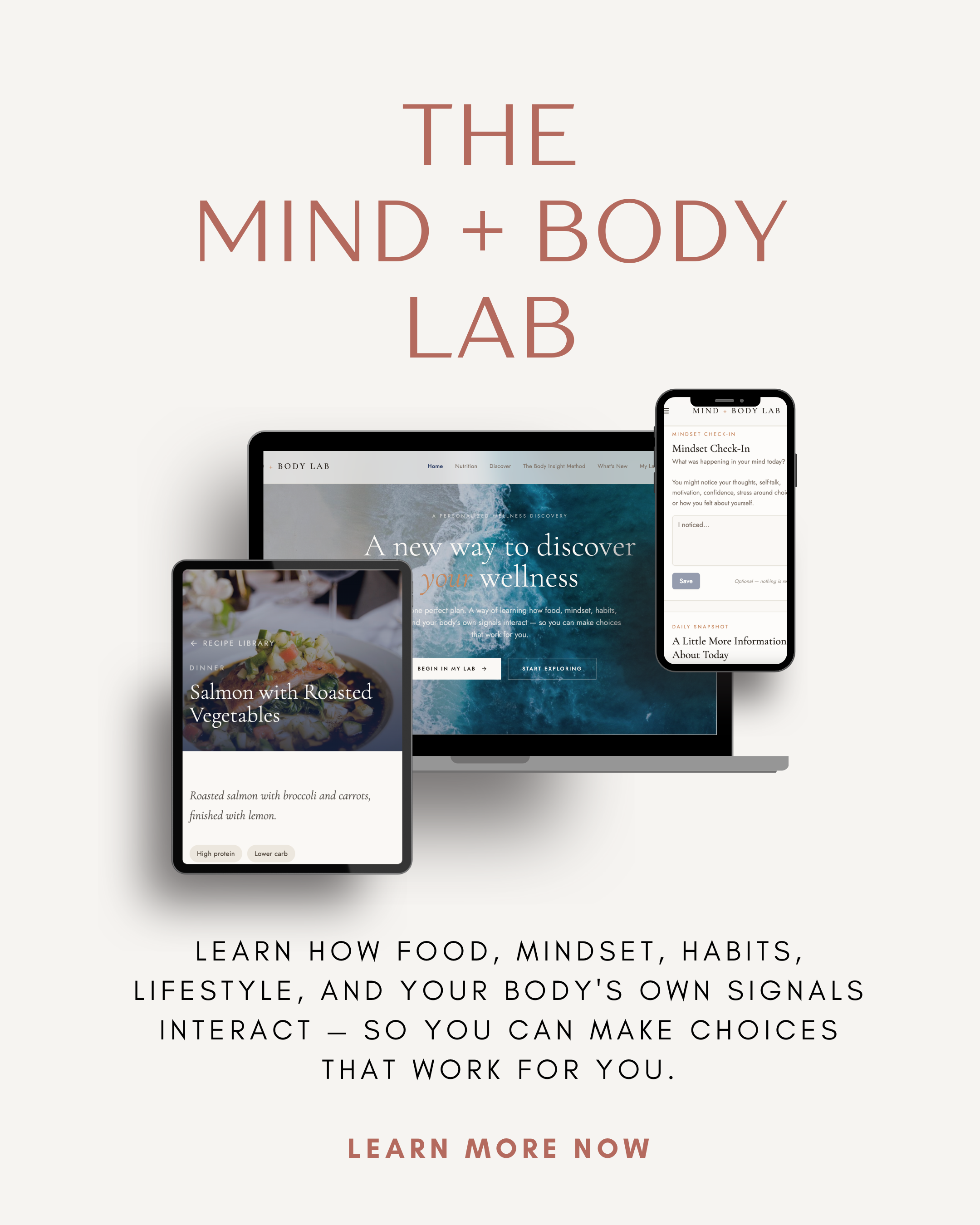
THE MIND + BODY LAB
Your mindset shapes your choices. Your body gives you feedback. The Mind + Body Lab brings these connections together through guided learning, real interaction, and tools to help you understand yourself, put what you learn into practice, and discover what works for you.
Inside the Lab:
Community & Practice — Connect with Margot and our team of coaches through weekly conversations, educational topics, wellness challenges, reflections, book clubs, and shared experiences. Ask questions, share what you're discovering, and put new ideas into practice alongside others.
My Lab: Understanding Yourself — Your personal space to record daily habits, tune into your body's signals, reflect on your experiences, and recognize patterns over time. Receive Daily + Weekly Insights based on the information you enter to help you learn from your own experience.
Guided Pathways & Tracks — Structured learning experiences with guided activities and practical action steps to help you explore topics like nutrition, mindset, habits, and body awareness.
Food & Recipes — Hundreds of healthy recipes, meal plans, meal prep tips, and practical nutrition resources, with options ranging from Mediterranean and high-protein + low-carb to vegetarian, GLP-1, anti-inflammatory, and more.
Discover — Explore educational topics covering mindset, identity, self-talk, limiting beliefs, perfectionism, self-care, motivation, eating behaviors, and more.
Because learning is just the beginning. The real magic happens when we put what we learn into practice — consistently.
Explore The Mind + Body Lab today!