




5 Steps To Stop Boredom Eating (A Simple, Real Life Approach)
/
We’ve all been there. I know I have! You’re wavering in the face of nothing to do and/or stalling from the things that need to get done.
You might have found yourself standing in front of the fridge, not really hungry—but still looking for something. Maybe you’re snacking while watching TV, scrolling, or just trying to fill time. Sometimes, you don’t even realize you’re doing it.
And afterward, it’s usually not even satisfying. It was just that automatic action that happens from time to time (or maybe regularly).
So why does this happen?
Boredom eating isn’t about a lack of willpower—it’s a pattern. And like any pattern, it can be changed with mindfulness and a few intentional shifts.
The goal isn’t perfection. It’s learning how to pause, understand what’s actually going on, and respond in a way that supports you or in a way that you would prefer to respond.
When it comes to boredom eating, you don’t need more willpower—you need a simple way to reset in the moment.
This is the framework I come back to and teach my clients:
How to Stop Boredom Eating in 5 Steps: The Pause & Shift Method
Pause and Check In
Notice the Pattern
Shift the Moment
Hydrate First
If You’re Hungry, Eat
1. Pause and Check In
Before you reach for food, take a moment to pause.
Ask yourself:
Am I actually hungry—or am I just bored, stressed, or looking for something to do?
This step alone can be a game changer.
A lot of the time, boredom eating is really:
Restlessness
Stress
Fatigue
Habit
Bringing awareness to why you’re eating helps you create space between the urge and the action.
If you want to take it a step further, try keeping a simple note in your phone or a journal:
When you’re eating
What you’re feeling
What time of day it is
You’ll start to notice patterns pretty quickly—and that awareness is where change begins.
2. Notice The Pattern
Once you start paying attention, you’ll likely notice that boredom eating isn’t random.
It usually happens around specific triggers:
A certain time of day (late afternoon, evening)
Watching TV or scrolling
Having snack foods easily available
Being around others who are eating
A routine that includes snacking
These patterns matter.
Because once you can see the trigger, you can start to shift it.
For example:
If it’s a nighttime habit → change your routine
If it’s accessibility → adjust what’s in your kitchen
If it’s environment → remove or reduce the cue
You don’t need to overhaul everything.
Just start with one trigger and make a small adjustment.
3. Shift In The Moment
This is where things start to shift.
Once you recognize the urge to eat out of boredom, instead of immediately acting on it, try replacing it with something else—even briefly.
This doesn’t need to be complicated.
It could be:
Going for a quick walk
Doing a few minutes of movement
Reading
Stepping outside for fresh air
Playing with your kids
Even just closing the kitchen and changing rooms
The goal isn’t to distract yourself forever—it’s to interrupt the pattern.
A helpful strategy:
Try a 10–15 minute reset.
If you still feel hungry after, then eat.
But often, the urge passes once you shift your attention.
Over time, this builds awareness and helps you respond more intentionally instead of automatically.
4. Hydrate First
This one gets overlooked, but it matters.
Sometimes what feels like hunger is actually thirst.
Before grabbing a snack, try drinking a glass of water and give it a few minutes.
Staying hydrated throughout the day can help:
Regulate appetite
Improve energy levels
Make it easier to recognize true hunger
You don’t need to be perfect with numbers, but as a general guide:
Aim to drink water consistently throughout the day
Keep a water bottle nearby
Have water with meals
It’s a simple habit that supports everything else.
5. You Might Actually Be Hungry: If so, eat
Sometimes it’s not boredom.
Sometimes you’re just… hungry.
And that’s important to recognize.
True hunger:
Comes on gradually
Can be felt physically (stomach, low energy)
Doesn’t go away with distraction
When that’s the case, the goal isn’t to avoid eating—it’s to eat in a way that actually supports you.
Choose something that’s balanced and satisfying:
Protein
Fiber
Healthy fats
For example:
Greek yogurt with fruit
Apple with nut butter
A simple snack plate
And if a snack isn’t enough, have a meal.
Under-eating earlier in the day often leads to more grazing later on.
Additional Thoughts
Boredom eating isn’t something you need to “fix” overnight (and it generally takes time, practice and consistency to develop a new behavior pattern).
It’s something you start to understand and then make adjustments to suit your needs.
The more awareness you build around:
Your habits
Your triggers
Your patterns
…the easier it becomes to shift them.
Start small:
Pause before eating
Try one alternative activity
Make one simple change to your routine
Because real change doesn’t come from restriction—it comes from consistency and awareness.
What to Do Next
If this is something you struggle with, don’t try to change everything at once.
Start with one step:
Notice when it’s happening
Pause
Choose a different response just once
That’s how the pattern begins to change.
Continue exploring more articles that might help support your behavioral eating needs:
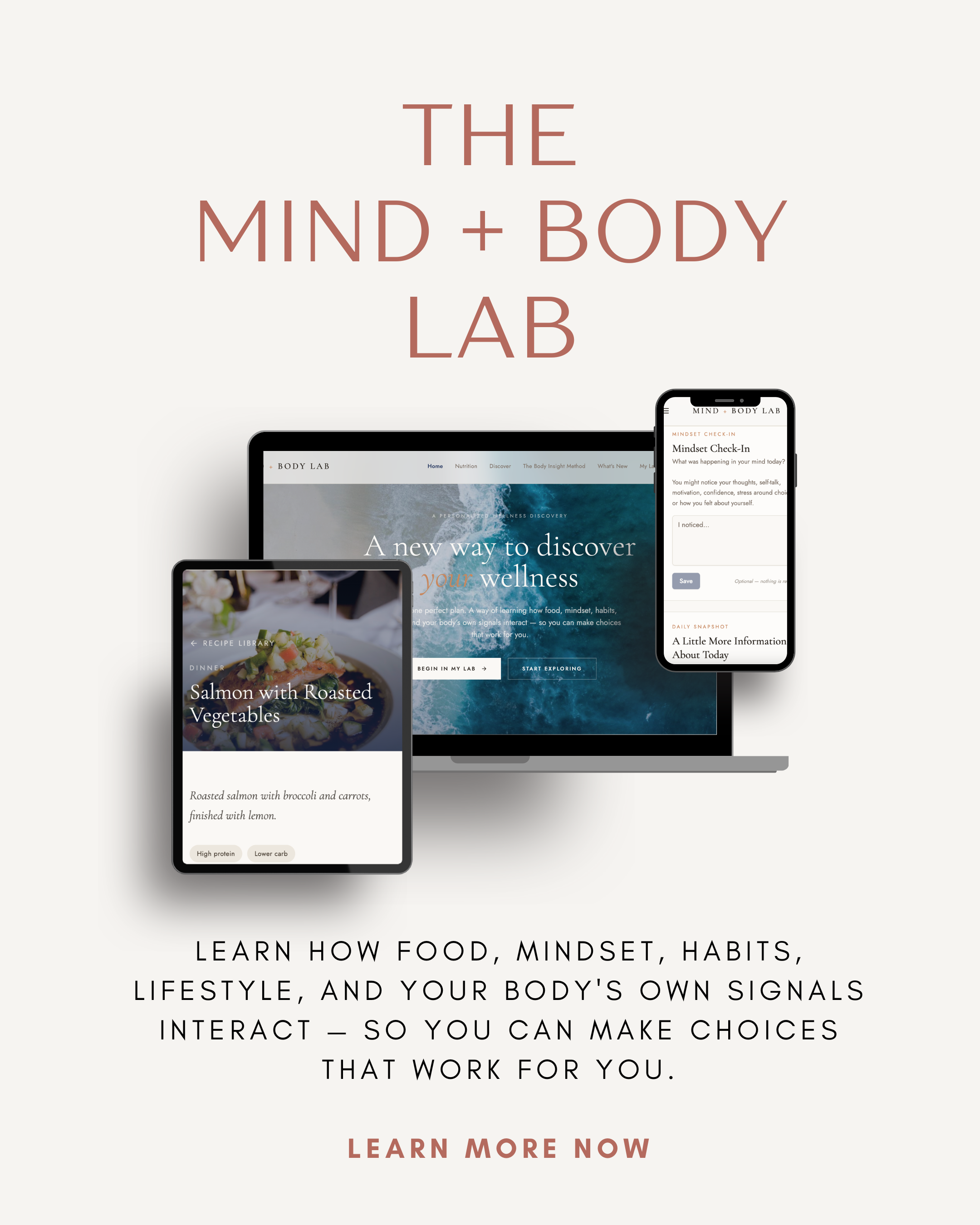
THE MIND + BODY LAB - SAY HELLO TO A NEW WAY TO APPROACH YOUR WELLNESS
A way of learning how food, mindset, habits, lifestyle, and your body's own signals interact — so you can make choices that work for you.
Includes:
Nutrition Pathways (Mediterranean, High Protein, GLP-1 & More - recipes, meal plans & action steps)
Discovery - tools & educations to learn and experiment with. Enjoy topics from mindset (identity, self-talk, limiting beliefs, perfectionism), self-care, habits and motivation to nutrition and eating behaviors.
The Body Insight Method - Learn how to tune into your body & lifestyle to create a wellness plan that works for you.
What’s New (interactive) - A space for our coaches to post weekly topics, reflective thoughts, monthly challenges and more. This is also a place for interaction. You can comment and ask questions to learn more!
My Lab (intuitive + interactive) - Your personal space to practice what you’re learning. Check in, reflect and notice what you’re learning and what’s working (or what isn’t). Let the lab provide helpful tips and pattern recognition to support your wellness & mindset goals.
Get The Mind + Body Lab Today!