



How To Build Sustainable Habits That Work With Your Lifestyle
/
Building Healthy Habits That Actually Stick
When it comes to improving your health and well-being, the key isn’t willpower — it’s habits.
Willpower is finite. It comes and goes depending on your stress level, sleep, emotions, and what life throws at you. Habits, on the other hand, are what quietly carry you forward when motivation fades. They’re the small, repeated actions that shape your days… and over time, your life.
Here’s the good news: your brain is designed to change. Thanks to neuroplasticity, every small habit you practice creates new neural pathways. Each repetition strengthens those pathways, making the behavior feel easier, more automatic, and more “like you.” This is how real, lasting change happens — not through force, but through repetition and consistency.
Whether your goal is weight loss, improved energy, better digestion, or simply feeling more at home in your body, building habits that align with your lifestyle is what makes change sustainable.
So let’s talk about how to do that — gently, realistically, and in a way that actually works.
Why Habits Matter More Than Motivation
Habits shape your daily actions, and your daily actions shape your results.
Motivation is helpful, but it’s unreliable. Habits create structure and consistency — even on busy days, low-energy days, or days when you’d rather not think about your goals at all.
The most effective habits are:
Sustainable: They fit into your real life — not an ideal version of it
Realistic: Small enough to repeat consistently
Personalized: Built around you, not someone else’s routine
When habits work with your nervous system instead of against it, they’re far more likely to stick.
6 Tools to Build Healthy Habits That Last
1. Get Clear and Set Gentle, Specific Goals
Before adding new habits, take a moment to clarify what you actually want — and why. Clear, specific goals give your brain direction and help you recognize progress as it happens.
Instead of “I want to be healthier,” try:
“I want more stable energy throughout the day.”
“I want habits that support fat loss without feeling restrictive.”
“I want to feel calmer and more consistent around food.”
Clarity creates intention — and intention creates momentum.
2. Use Habit Stacking
Habit stacking works by pairing a new habit with something you already do regularly. This helps your brain create a connection between the two behaviors, making the new habit easier to remember and repeat.
For example:
Drinking water while your coffee brews
Stretching while dinner cooks
Taking a few deep breaths before your first bite of a meal
This approach supports neuroplasticity by building on existing neural pathways instead of starting from scratch.
3. Change Your Environment
Your environment plays a huge role in your habits — often more than willpower ever could.
Set yourself up for success by:
Keeping nourishing foods visible and accessible
Reducing friction around habits you want to practice
Making supportive choices the “easy” choice
When your environment supports your goals, your brain doesn’t have to work as hard to follow through.
4. Build on Small Wins
Big change is built from small, repeatable actions.
Starting small allows your nervous system to feel safe and successful. Each win reinforces the belief that change is possible — and that confidence fuels consistency.
Think progress, not perfection. Momentum grows when habits feel doable.
5. Practice Habit Substitution
Rather than focusing on what you’re “trying to stop,” shift your attention to what you’re adding instead.
For example:
Replacing late-night snacking with a calming routine
Swapping scrolling for a short walk or stretch
Choosing protein-forward meals that keep you fuller longer
This reframes change as supportive rather than restrictive — which your brain responds to far more positively.
6. Create Accountability (With Compassion)
Accountability doesn’t have to be rigid or external — it can be as simple as checking in with yourself.
This might look like:
Tracking habits in a journal or app
Sharing your goals with a supportive friend
Reflecting weekly on what’s working and what isn’t
Accountability works best when it’s paired with curiosity, not judgment.
How Habits Are Formed (And Why Repetition Matters)
Habits aren’t built overnight — they’re built through practice, consistency, and repetition.
Practice: Repeating a behavior teaches your brain that it’s important
Consistency: Showing up regularly strengthens neural pathways
Repetition: Each repetition makes the habit feel easier and more automatic
This is neuroplasticity in action. Every time you repeat a habit, your brain is literally rewiring itself to support that behavior.
At first, habits require intention and effort. Over time, they become part of who you are.
A Gentle Reminder as You Move Forward
You don’t need to change everything at once.
Real, lasting change comes from experimenting, adjusting, and meeting yourself where you are — not where you think you should be. Choose one habit to start with. Practice it consistently. Let it settle. Then build from there.
Your brain is always learning. Every small step you take is shaping new pathways, new patterns, and a new sense of trust in yourself.
Progress isn’t loud or dramatic — it’s quiet, steady, and deeply powerful.
And you’re already on your way.
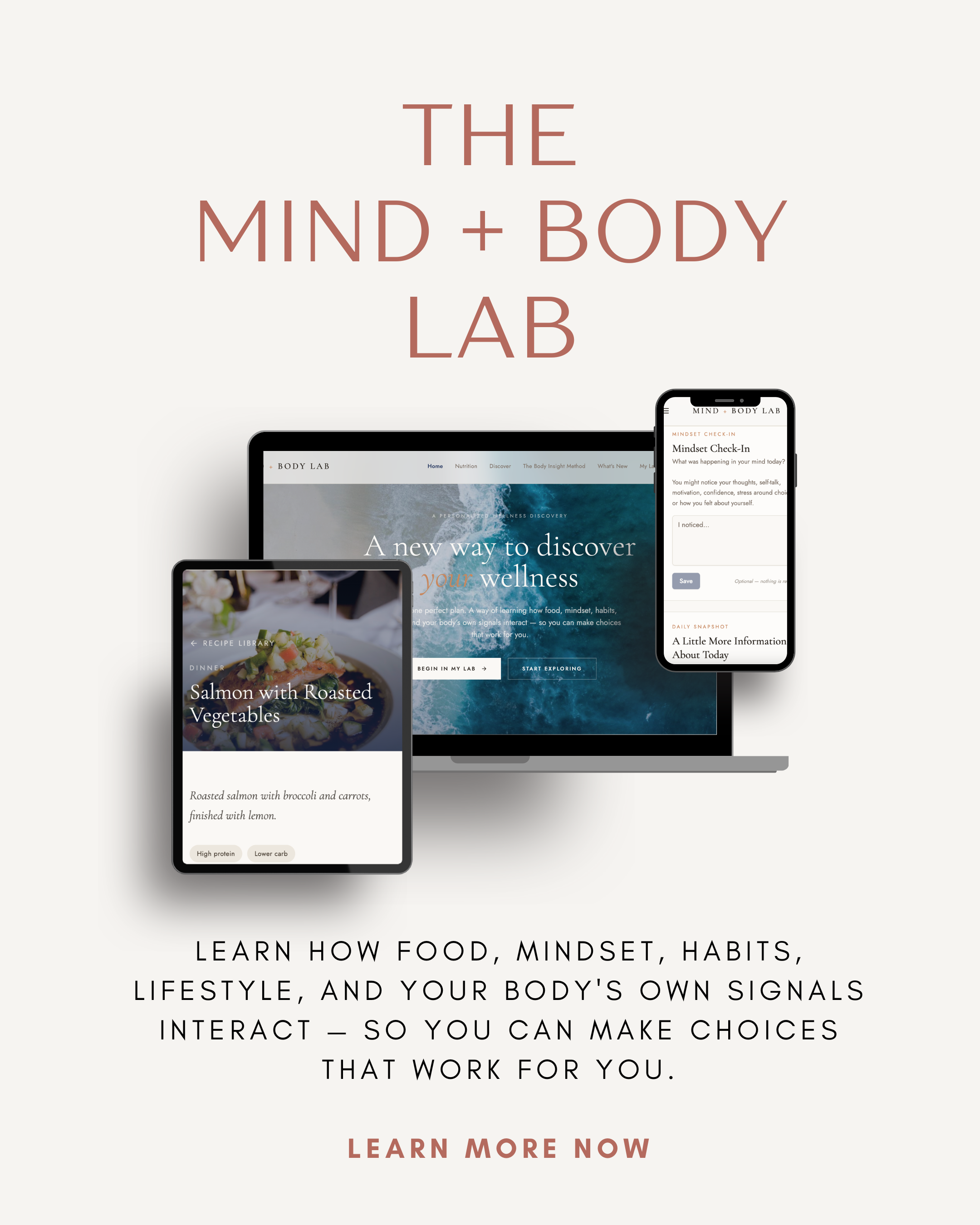
THE MIND + BODY LAB - SAY HELLO TO A NEW WAY TO APPROACH YOUR WELLNESS
A way of learning how food, mindset, habits, lifestyle, and your body's own signals interact — so you can make choices that work for you.
Includes:
Nutrition Pathways (Mediterranean, High Protein, GLP-1 & More - recipes, meal plans & action steps)
Discovery - tools & educations to learn and experiment with. Enjoy topics from mindset (identity, self-talk, limiting beliefs, perfectionism), self-care, habits and motivation to nutrition and eating behaviors.
The Body Insight Method - Learn how to tune into your body & lifestyle to create a wellness plan that works for you.
What’s New (interactive) - A space for our coaches to post weekly topics, reflective thoughts, monthly challenges and more. This is also a place for interaction. You can comment and ask questions to learn more!
My Lab (intuitive + interactive) - Your personal space to practice what you’re learning. Check in, reflect and notice what you’re learning and what’s working (or what isn’t). Let the lab provide helpful tips and pattern recognition to support your wellness & mindset goals.
Get The Mind + Body Lab Today!