




Constipation on a GLP-1? Here's Why It Happens (and What You Can Do About It)
/
One of the questions I hear all the time from coaching clients taking GLP-1 medications is:
"Is it normal to feel constipated?"
Or sometimes they'll say,
"I just don't feel...normal anymore."
I’m writing this blog post because I know that, for some people, it can also be a little bit hard to talk about. It might feel a little bit embarrassing to ask. I figured I could create a safe reference point through a blog post so you can get some of your questions answered.
Also, if you've experienced this, you're definitely not alone.
Constipation is one of the most common side effects of GLP-1 medications. The good news is that in many cases, it's temporary and there are several simple strategies that can help.
Before we jump into solutions, I think it's important to understand why it's happening in the first place. Once you understand what's going on inside your body, it becomes much easier to work with it instead of feeling frustrated by it.
Why GLP-1 Medications Can Cause Constipation
There usually isn't just one reason. It's often several small changes happening at the same time.
1. You're Eating Less Food
This is probably the biggest reason.
GLP-1 medications reduce appetite, which means most people naturally eat less food than they did before.
Less food going in simply means there's less waste being produced.
Many people expect to have the same bowel habits they had before starting a GLP-1, but when your food intake changes, it's completely normal for your bowel movements to change too.
This doesn't automatically mean something is wrong.
2. You're Probably Eating Less Fiber
When appetite decreases, it's common for meals to become much smaller.
Unfortunately, fiber is often one of the first things to decrease.
Maybe you're skipping vegetables.
Maybe fruit doesn't sound appealing.
Maybe you're eating just enough protein to meet your goals and not much else.
Fiber adds bulk to stool and helps keep everything moving through the digestive tract. When fiber intake drops, constipation becomes much more likely.
3. Your Digestive System Is Moving More Slowly
GLP-1 medications intentionally slow gastric emptying.
That's actually one of the reasons they help people feel fuller longer.
But that slower digestion doesn't just happen in the stomach. Your entire digestive system tends to move more slowly.
The longer stool sits in the colon, the more water the colon absorbs from it.
The result?
The stool becomes drier, firmer, and more difficult to pass.
4. Dehydration Happens More Easily Than You Think
This is another one I see all the time.
Many people don't realize that when appetite changes, their entire routine changes.
You aren't thinking about food as often.
You may even feel mildly nauseated.
You're not following your normal eating schedule anymore.
Sometimes that also means you're unintentionally drinking less water.
Even mild dehydration can dry out stool and make constipation worse.
And remember—you don't have to be drenched in sweat to lose water.
You lose fluids every day through breathing, urination, normal skin evaporation, exercise, hot weather, and daily activity.
How to Help Relieve Constipation on a GLP-1
The goal isn't necessarily to do everything at once.
I actually encourage my clients to experiment with one strategy at a time whenever possible. That way you can learn what works best for your body.
Here are the strategies I recommend most often.
Prioritize Hydration
Hydration is one of the simplest and most effective places to start.
Water helps keep stool soft and makes it much easier for your digestive system to eliminate waste.
A general starting point is aiming for approximately half of your body weight (in pounds) in ounces of water per day, although your needs may be higher if:
you exercise regularly
you live in a hot climate
you spend a lot of time outdoors
you're sweating frequently
Rather than trying to drink a huge amount all at once, spread your water intake throughout the day.
Build Meals Around Protein, Fiber, and Water
This is one of the principles I teach often because it supports so many different wellness goals—not just digestion.
Try to structure each meal around:
Protein
Fiber-rich vegetables
Fruit when appropriate
Foods with high water content
Examples include:
cucumbers
tomatoes
zucchini
berries
apples
leafy greens
broccoli
bell peppers
These foods provide hydration while also increasing fiber intake naturally.
Keep Moving
Movement doesn't just support weight loss.
It also supports digestion.
Walking after meals, strength training, yoga, stretching, or any movement you enjoy can help stimulate your digestive system and encourage regular bowel movements.
You don't have to do anything extreme.
Consistency matters much more than intensity.
Increase Fiber Slowly
If you decide to increase fiber, do it gradually.
Adding large amounts of fiber all at once—especially without increasing water—can actually make constipation worse.
Instead, slowly increase fruits, vegetables, beans, lentils, whole grains (if they fit your nutrition plan), nuts, and seeds over time.
Your digestive system generally adapts much better with gradual changes.
Consider Additional Support (If You Need It)
If you've been consistently working on the basics—drinking enough water, eating enough fiber, moving your body regularly, and you're still struggling with constipation—it may be worth exploring a few additional options.
That said, this is also a good reminder that we're all different. Your health history, medications, medical conditions, and individual needs all matter. Before adding any supplements or over-the-counter products, talk with your healthcare provider to determine what's appropriate for you.
Some options your provider may recommend include:
Fiber supplements. If you're not consistently meeting your fiber needs through food, a fiber supplement may help increase stool bulk and support regular bowel movements. Just remember that increasing fiber without increasing water can sometimes make constipation worse, so these two should always go hand in hand.
Magnesium. Certain forms of magnesium—particularly magnesium citrate—may help draw water into the intestines and make stools easier to pass. Other forms, such as magnesium glycinate, are generally used for different purposes and aren't typically recommended for constipation. Your healthcare provider can help you determine whether magnesium is appropriate for you and which form best fits your needs.
Stool softeners or gentle laxatives. If constipation becomes more persistent, your healthcare provider may recommend a short-term stool softener or another over-the-counter option. These can be helpful when used appropriately, but they generally aren't intended to replace the foundational habits that support healthy digestion over the long term.
The most important thing is to remember that constipation on a GLP-1 is common, but you don't have to simply live with it. Start with one strategy, give your body time to respond, and pay attention to how you feel. If something helps, keep it. If it doesn't, make one adjustment at a time. That's how you learn what works best for your body.
My Coaching Perspective
One thing I always remind my coaching clients is this: Your body is constantly giving you information. Constipation isn't your body "failing." It's feedback.
Your appetite has changed, your food intake has changed, your hydration may have changed and your digestive system is moving differently than it was before.
Instead of immediately assuming something is wrong, get curious.
Implement one strategy at a time. Give it a little time (maybe 1-2 weeks) to see how it goes. Notice how your body responds.
If that helps, wonderful—keep going.
If it doesn't, try another approach.
That's exactly how we learn what works best for your physiology.
When Should You Call Your Healthcare Provider?
Occasional constipation is common when starting a GLP-1 medication.
However, contact your healthcare provider if you experience:
severe or persistent constipation
significant abdominal pain
vomiting
blood in your stool
inability to pass stool for several days despite trying conservative measures
They can help determine whether medication adjustments or additional treatment are needed.
One of the biggest lessons I hope people take away from this is that side effects don't always mean something is "wrong." Often, they simply mean your body is adapting to something new.
Pay attention to your body's feedback. Stay hydrated. Build your meals around protein, fiber, and water. Keep moving. Then give your body a little time to respond.
That's the heart of what I teach through the Body Insight Method. Your body is always communicating with you. The more you learn to tune in, the more confident you'll become in knowing how to support it.
Wishing you well - Margot
More GLP-1 Resources To Explore
Ways To Learn & Grow:
Body Insights Method - Learn how to work with your body and lifestyle to create sustainable wellness from the inside out.
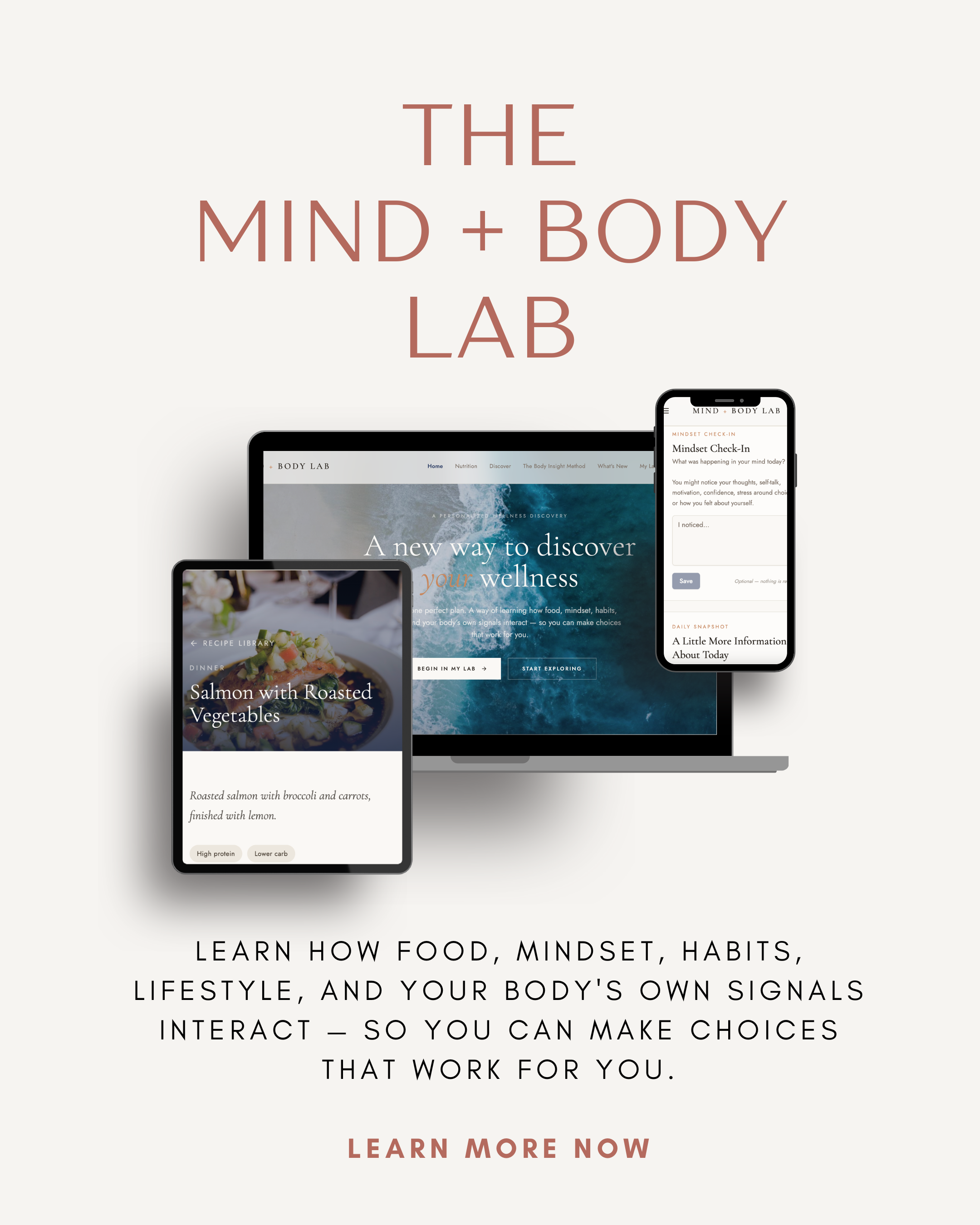
Mind-Body Lab - A guided wellness membership where you'll learn, practice, and grow with monthly education, challenges, and practical wellness tools.
Personalized Wellness Coaching - Receive one-on-one coaching and a personalized plan designed around your body, goals, and lifestyle.
THE MIND + BODY LAB - SAY HELLO TO A NEW WAY TO APPROACH YOUR WELLNESS
A way of learning how food, mindset, habits, lifestyle, and your body's own signals interact — so you can make choices that work for you.
Includes:
Nutrition Pathways (Mediterranean, High Protein, GLP-1 & More - recipes, meal plans & action steps)
Discovery - tools & educations to learn and experiment with. Enjoy topics from mindset (identity, self-talk, limiting beliefs, perfectionism), self-care, habits and motivation to nutrition and eating behaviors.
The Body Insight Method - Learn how to tune into your body & lifestyle to create a wellness plan that works for you.
What’s New (interactive) - A space for our coaches to post weekly topics, reflective thoughts, monthly challenges and more. This is also a place for interaction. You can comment and ask questions to learn more!
My Lab (intuitive + interactive) - Your personal space to practice what you’re learning. Check in, reflect and notice what you’re learning and what’s working (or what isn’t). Let the lab provide helpful tips and pattern recognition to support your wellness & mindset goals.
Get The Mind + Body Lab Today!