


Weekend Survival Guide for Your Health & Wellness Goals
/
Let’s be honest: weekends can look very different from the rest of your week. This is a common theme that we hear both from our wellness retreat guests and our coaching clients.
Your schedule changes. You may eat out more. There are dinners, happy hours, birthday parties, travel, family activities, brunch, sleeping in, and maybe a few things you didn’t plan for. That’s normal and these things often pop up especially on weekends.
A healthy lifestyle has to work on the weekends, too. If your approach only works when you have complete control over your schedule, your meals, and your environment, it’s probably not an approach that’s going to work very well in real life. The goal is to create a system that’s sustainable for all pieces of life - the weekdays when you can “adhere” to your wellness habits a little bit easier but also on weekends and even holidays when you’re ready to enjoy life. And you should be enjoying life!
It’s to learn how to navigate your weekend in a way that allows you to enjoy your life and continue practicing the habits that support your health.
That starts with a little awareness and a little planning.
1. Check Your Schedule
Before the weekend gets underway, take a quick look at what you actually have going on.
Where are you eating? Do you have plans with friends? Are you traveling? Will you be home most of the weekend? Is there a workout you want to fit in? Do you have a particularly busy Saturday or a completely open Sunday?
You don't need to plan every minute.
You’re simply looking for the places where your normal routine might change so you can make a few intentional decisions ahead of time.
For example, maybe you know you’re going to dinner Saturday night. That doesn’t mean you need to restrict what you eat all day Saturday. It simply means you can think about what you want the rest of your day to look like so you arrive at dinner feeling nourished rather than overly hungry.
Try this: Ask yourself:
What does my weekend actually look like?
Where might my normal routine change?
What am I looking forward to?
Where might I need a little more planning?
Where do I want to leave room for flexibility?
That five-minute check-in can make a big difference.
2. Plan the Parts You Can Control
Once you know what your weekend looks like, think about the pieces you can influence.
Maybe you’ll eat out Saturday night, but you can make breakfast and lunch at home. Maybe you have brunch with friends Sunday, but you can take a walk beforehand. Maybe you're traveling and won't have access to your normal gym, but you can find a way to move wherever you are.
This isn’t about creating a rigid plan that you have to follow perfectly.
It’s about making a few decisions before you’re in the moment.
If you’re going to a restaurant, take a look at the menu ahead of time if that helps you feel prepared. If you know you’ll be busy, have a few easy foods available at home. If movement matters to you, put it on your calendar.
And remember that planning doesn’t mean planning for perfection.
Plan for real life.
3. Don’t “Save Up” for a Big Meal
This is one I want to include because it’s a habit I see often: eating very little during the day because you know you’re going out to dinner later.
It might seem logical, but arriving at a social event extremely hungry can make it much harder to make choices that feel good to you.
Instead, eat normally throughout the day.
Have a nourishing breakfast. Eat lunch. Have a snack if you’re hungry. Include protein and foods that satisfy you.
Then go enjoy dinner.
You don't need to earn your meal by eating less earlier in the day.
And you don't need to compensate for dinner by eating less the next day.
One meal is one meal. Your overall pattern matters much more than trying to balance every individual decision.
4. Keep Your Anchor Habits
You don’t have to maintain your entire weekday routine over the weekend.
But keeping a few anchor habits can help you feel connected to the things that matter to you.
Maybe that’s:
Drinking water when you wake up
Getting outside in the morning
Having protein with breakfast
Taking a walk
Moving your body in some way
Getting enough sleep
Taking a few quiet minutes for yourself
Checking in with your hunger and fullness
Going to bed at a reasonable time
Choose the habits that help you feel like yourself. These aren’t rules you have to follow perfectly. They’re reminders that help ground you when your schedule changes. Sometimes one small habit is enough to reconnect you to the rest of your routine.
5. Make Room for Enjoyment
This one is important. Your health goals should not require you to opt out of your life. Go to dinner, have brunch, enjoy the birthday cake, or order the cocktail.
Try the restaurant you’ve been wanting to visit and eat the food you really love. The question isn’t whether you can ever have these things. The more useful question is how you want to experience them.
Slow down enough to actually enjoy what you chose. Pay attention to how it tastes. Notice when you’re satisfied. Put your phone down and talk to the people you're with. And if you decide you really want dessert, have dessert. You don’t need to turn every enjoyable food into something you have to feel guilty about afterward.
6. Pay Attention to Your Body
Weekends can give you some really useful information about your habits.
Maybe you notice that you feel better when you eat breakfast.
You might tune into the fact that alcohol affects your sleep more than you realized.
Maybe you’re genuinely hungry after a long day of activities.
There might be certain foods leave you feeling uncomfortable.
You might actually enjoy moving your body in the morning because it gives you more energy for the rest of the day.
Notice it all of these things.
This is where I want you to shift from judging your choices to gathering information from them.
Instead of:
I was bad this weekend.
Try:
I made different choices and I am still figuring out what works for me.
Instead of:
I completely blew it.
Try:
How would I want to handle that differently in the future?
Your body and your experiences are giving you information all the time. You just have to slow down enough to notice.
7. Navigate Social Situations Without Making Food the Focus
Sometimes the hardest part of the weekend isn’t the food. It’s the people around you. Someone might encourage you to have another drink. A friend might insist you try the dessert. Someone might comment on what you're eating—or not eating. You are allowed to make your own choices. And you’re allowed to make the choices that feel the best for you.
You can say:
“No thanks, I’m good.”
“That looks amazing, but I’m going to pass.”
“I’d love some, but just a small piece.”
Or you can say yes because you genuinely want it. The point is to make the decision yourself rather than feeling like you have to follow the crowd. And remember that being social is about more than what’s on the table. Focus on the conversation, the people you're with, the experience, and the reason you showed up in the first place.
8. Move Because It Feels Good
You don't need to exercise to “burn off” what you ate. Movement isn't punishment, and you don't need to earn your food. That being said, moving your body can still be one of the best ways to support your weekend - both in body and mind.
Take a walk on the beach. Go for a bike ride. Do a workout you enjoy. Play with your kids. Take a yoga class. Walk around a new city. Put on music and move around your house. Maybe you have time for a full workout. Maybe you don't.
Either way, you can ask yourself:
What kind of movement would feel good today?
That question can take you a lot further than How many calories do I need to burn?
9. Prioritize Sleep
Sleep can be one of the first things to disappear when the weekend gets busy. You stay out later. You sleep in. Your schedule changes. Maybe you have a few drinks. And suddenly Monday arrives and you feel completely off. Enjoy your late night when you want to—but also pay attention to how you feel afterward.
If you notice that several nights of poor sleep leave you more tired, more hungry, less motivated to move, or generally not feeling your best, that’s useful information. You don’t need a perfect bedtime every night. Just give sleep some consideration when you're planning your weekend.
10. If the Weekend Doesn't Go as Planned, Just Start Again
This might be the most important step of all.
Maybe the weekend didn’t go quite as planned. You ate more than you intended, skipped your workout, or stayed out later than you expected. It happens - and it’s normal. There’s no need to overcorrect the next day or wait until Monday to return to your usual habits. Just pick up where you are, make your next choice one that feels good for you, and move on. One weekend doesn’t define your progress, and you don’t have to make up for enjoying yourself.
Drink some water. Eat your next meal normally. Go for a walk. Get some sleep. Return to the habits that make you feel good.
You can always begin again with the very next decision.
Want to learn more about your own patterns?
Your weekends can tell you a lot about your habits, hunger, energy, movement, sleep, stress, and the choices you make when your routine changes.
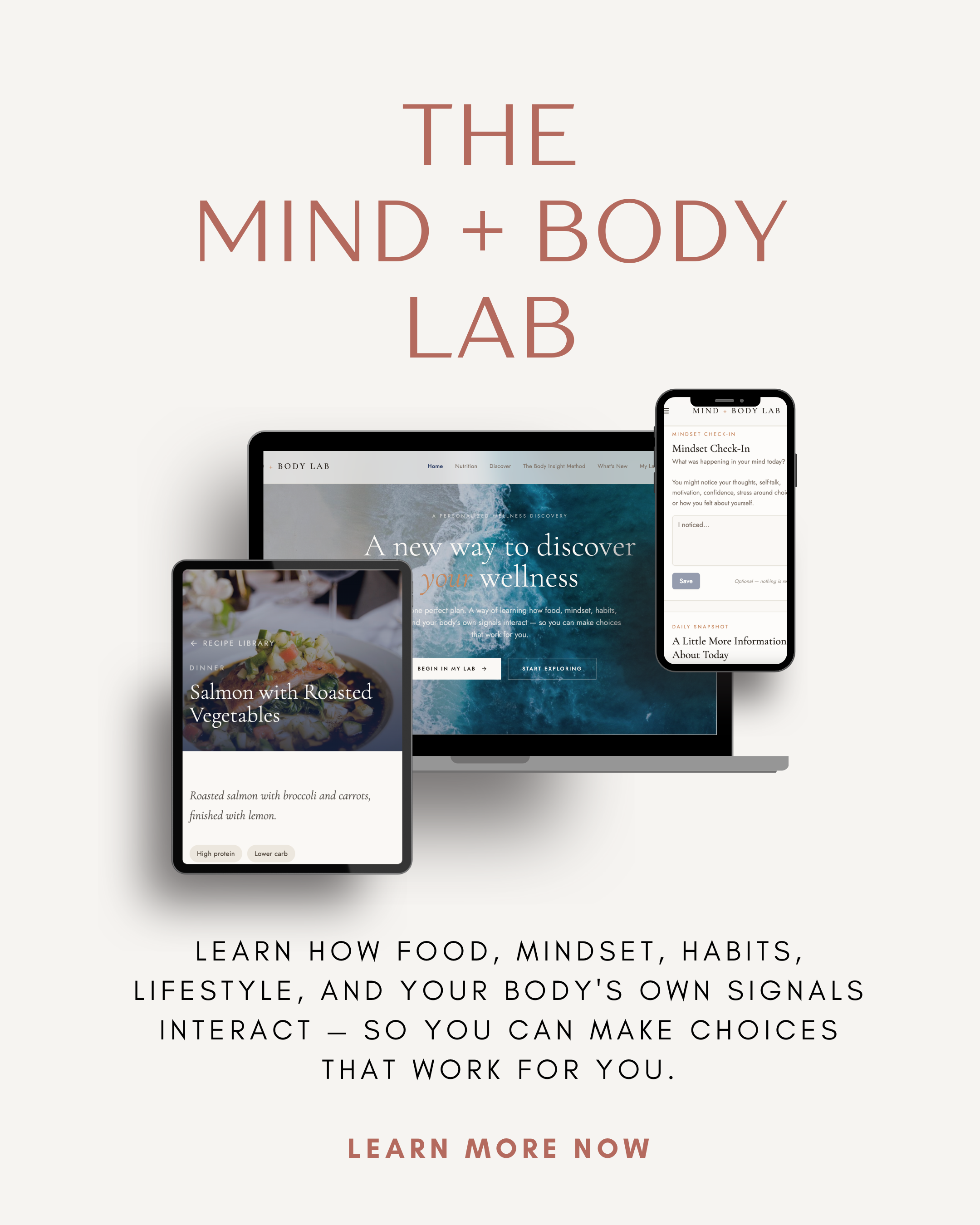
That’s exactly what we practice inside Mind Body Lab—not following another set of rules, but learning to pay attention to your own patterns, experiment with what works, and build habits that fit your actual life.
THE MIND + BODY LAB
Your mindset shapes your choices. Your body gives you feedback. The Mind + Body Lab brings these connections together through guided learning, real interaction, and tools to help you understand yourself, put what you learn into practice, and discover what works for you.
Inside the Lab:
Community & Practice — Connect with Margot and our team of coaches through weekly conversations, educational topics, wellness challenges, reflections, book clubs, and shared experiences. Ask questions, share what you're discovering, and put new ideas into practice alongside others.
My Lab: Understanding Yourself — Your personal space to record daily habits, tune into your body's signals, reflect on your experiences, and recognize patterns over time. Receive Daily + Weekly Insights based on the information you enter to help you learn from your own experience.
Guided Pathways & Tracks — Structured learning experiences with guided activities and practical action steps to help you explore topics like nutrition, mindset, habits, and body awareness.
Food & Recipes — Hundreds of healthy recipes, meal plans, meal prep tips, and practical nutrition resources, with options ranging from Mediterranean and high-protein + low-carb to vegetarian, GLP-1, anti-inflammatory, and more.
Discover — Explore educational topics covering mindset, identity, self-talk, limiting beliefs, perfectionism, self-care, motivation, eating behaviors, and more.
Because learning is just the beginning. The real magic happens when we put what we learn into practice — consistently.
Explore The Mind + Body Lab today!