



10 GLP-1 Diet Do's and Don'ts for Success
/
Simple Habits That Can Help You Feel Your Best During Your GLP-1 Journey
GLP-1 medications like semaglutide and tirzepatide have become increasingly popular for weight loss, blood sugar management and overall metabolic health support.
And while these medications can absolutely be powerful tools, one thing I always remind clients and readers is this:
GLP-1 medications do not replace foundational health habits.
They can support appetite regulation, portion control and weight loss, but long-term success still comes from creating sustainable habits that help support:
muscle mass
energy levels
balanced nutrition
metabolic health
strength
overall wellbeing
One challenge many people experience on GLP-1 medications is that eating less can sometimes unintentionally lead to:
inadequate protein intake
low energy
poor hydration
nutrient deficiencies
muscle loss
under-fueling
That is why it is so important to focus not just on eating less, but on eating well.
This guide is designed to help you support your body in a realistic, balanced and sustainable way while using a GLP-1 medication.
→ If you're looking for a step-by-step roadmap for wellness & weight loss, we've created The Mind + Body Lab to help you build a personalized, sustainable approach to wellness that fits your body and your lifestyle.
DO: Prioritize Protein
If there is one habit I encourage people to focus on most during a GLP-1 journey, it is protein intake.
Because appetite is often reduced, protein can easily become too low without realizing it.
Protein helps support:
muscle preservation
fullness and satiety
energy levels
recovery
healthy aging
metabolism
Try building meals around protein first:
eggs
Greek yogurt
cottage cheese
chicken
fish
tofu
edamame
protein smoothies
beans and lentils
For many people, aiming for protein consistently throughout the day feels more manageable than trying to eat large portions at once.
DO: Focus on Nutrient Density
When appetite is lower, every meal matters a little more.
Instead of focusing only on calories, think about how to maximize nutrition with the foods you are eating.
Focus on foods rich in:
protein
fiber
healthy fats
vitamins and minerals
antioxidants
Examples:
vegetables
fruit
salmon
eggs
Greek yogurt
beans
nuts and seeds
olive oil
sweet potatoes
quinoa
This can help support energy, digestion, recovery and overall health while eating less overall.
DO: Stay Hydrated
Hydration is incredibly important on GLP-1 medications, especially because slowed digestion and reduced appetite may sometimes make it easier to under-consume fluids.
Dehydration may contribute to:
headaches
fatigue
constipation
dizziness
low energy
Simple ways to support hydration:
carry a water bottle
add electrolytes if needed
drink fluids consistently throughout the day
include hydrating foods like fruit and vegetables
DO: Keep Moving and Strength Train
Movement is about much more than calorie burn.
Strength training and regular movement help support:
muscle preservation
metabolic health
bone health
energy
mobility
long-term weight maintenance
You do not need an extreme workout routine.
Walking, strength training, Pilates, swimming, cycling and mobility work can all be incredibly supportive.
The goal is consistency — not perfection.
DO: Learn Your Hunger & Fullness Cues
One unique aspect of GLP-1 medications is that they can significantly change appetite and fullness signals.
This can actually become an opportunity to rebuild awareness around:
hunger
satisfaction
emotional eating
meal timing
eating patterns
Instead of following rigid food rules, practice checking in with your body and learning what helps you feel your best physically and mentally.
DON’T: Under-Eat for Long Periods of Time
One of the biggest mistakes I see is people eating far too little because they simply are not hungry.
While appetite suppression is common, chronically under-eating may contribute to:
fatigue
muscle loss
nutrient deficiencies
hair loss
low energy
slowed recovery
Even when appetite is low, your body still needs nourishment.
Small, balanced meals can often feel more manageable than large meals.
DON’T: Ignore Digestive Symptoms
Digestive side effects can happen with GLP-1 medications, especially early on.
Symptoms like:
nausea
constipation
bloating
reflux
stomach discomfort
may sometimes improve with:
slower eating
hydration
fiber intake
smaller meals
limiting overly greasy or heavy foods
If symptoms persist or worsen, it is important to speak with your healthcare provider.
DON’T: Rely Only on the Medication
Here’s what I always say to our clients in The Mind + Body Lab: GLP-1 medications can be incredibly helpful tools, but they work best when combined with sustainable lifestyle habits.
It’s so important for you to develop the lifestyle tools along side the medication. Don’t wait for it to work its magic.
Long-term success is often supported by:
balanced meals
strength training
sleep
stress management
movement
hydration
consistency
The medication may help create momentum, but your habits help maintain progress long term.
DON’T: Chase Perfection
You do not need to eat perfectly to make progress. This journey is one of finding what works for YOU. There is no perfect. It’s all about tuning into your body and your lifestyle.
One of the most sustainable things you can do is stop approaching health with an all-or-nothing mindset.
There will be:
vacations
social events
imperfect meals
low motivation days
stressful weeks
That is normal.
Focus on building habits you can realistically maintain instead of trying to follow rigid food rules perfectly.
DON’T: Compare Your Journey to Someone Else’s
Everyone responds differently to GLP-1 medications. I can tell you from my coaching experience that this journey is so different for each person.
Appetite changes, weight loss, side effects, food preferences and timelines can all vary significantly from person to person.
Your journey does not need to look like someone else’s to still be successful.
Focus on:
how you feel
your health markers
your strength
your energy
your consistency
your relationship with food
Those things matter too.
Coach’s Notes
One thing I always encourage clients to remember is that the goal is not simply weight loss.
The goal is supporting your health in a way that feels sustainable, realistic and supportive for your body long term.
It’s always important to consider the “what if’s” - what if you need to discontinue use of your GLP-1 for some reason (health, side effects, insurance, etc).
GLP-1 medications can absolutely be helpful tools, but the habits you build alongside them are what truly create lasting change.
Start simple:
prioritize protein
stay hydrated
move consistently
nourish your body
focus on balance instead of perfection
Small habits practiced consistently over time can have a powerful impact on your overall health and wellbeing.
EXPLORE MORE
Read More Posts
Ways To Learn & Grow
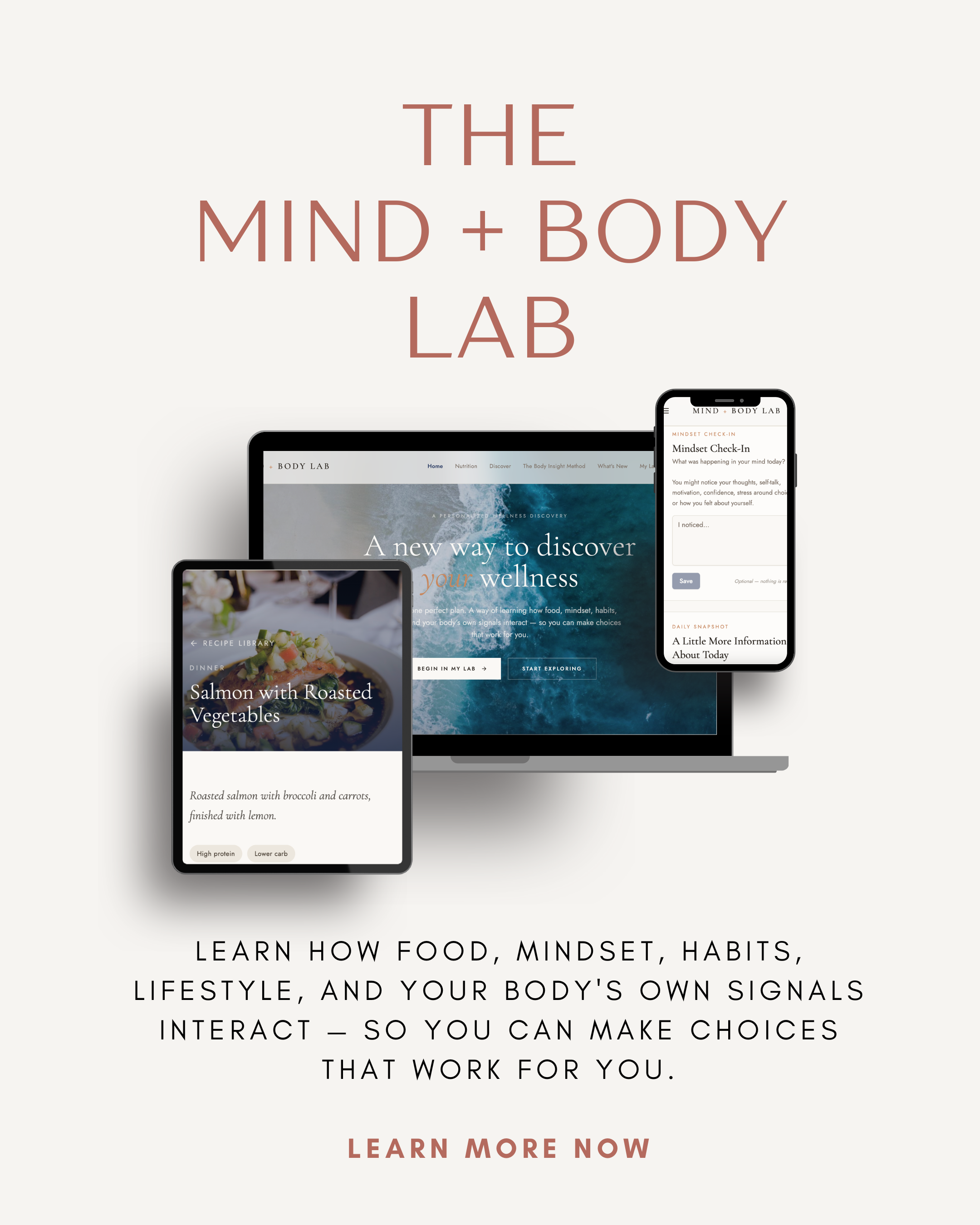
Mind-Body Lab - A guided wellness membership where you'll learn, practice, and grow with monthly education, challenges, and practical wellness tools.
SAY HELLO TO A NEW WAY TO APPROACH YOUR WELLNESS WITH THE MIND + BODY LAB
A way of learning how food, mindset, habits, lifestyle, and your body's own signals interact — so you can make choices that work for you.
Includes:
Nutrition Pathways (Mediterranean, High Protein, GLP-1 & More - recipes, meal plans & action steps)
Discovery - tools & educations to learn and experiment with. Enjoy topics from mindset (identity, self-talk, limiting beliefs, perfectionism), self-care, habits and motivation to nutrition and eating behaviors.
The Body Insight Method - Learn how to tune into your body & lifestyle to create a wellness plan that works for you.
What’s New (interactive) - A space for our coaches to post weekly topics, reflective thoughts, monthly challenges and more. This is also a place for interaction. You can comment and ask questions to learn more!
My Lab (interactive) - Your personal space to practice what you’re learning. Check in, reflect and notice what you’re learning and what’s working (or what isn’t). Let the system provide helpful tips and pattern recognition to support your wellness & mindset goals.
Get The Mind + Body Lab Today!