




The Power of Getting 1% Better Every Day
/
“If you get one percent better each day for one year, you'll end up thirty-seven times better by the time you're done.” — James Clear
When we decide we want to make a change, it's easy to want everything to happen at once. Whether we're working toward a health and wellness goal, building a business, making a career change, or simply trying to create a different routine, we often want to jump right in and do everything we can to get there faster.
And that makes sense. We have a goal in mind, we're motivated to make it happen, and we want to see results. But sometimes, our desire to change everything all at once can actually make it harder to move forward.
The reality is that meaningful change doesn't always require a complete overhaul of your life. Sometimes, the most valuable thing you can do is focus on getting just 1% better each day.
→ Ready to learn and practice real, sustainable habits? Explore The Mind + Body Lab.
1. Why We Want to Change Everything at Once
Think about a time when you decided to make a change. Maybe you wanted to improve your health, so you planned to start exercising more, change your eating habits, drink more water, improve your sleep, and find better ways to manage stress. Or perhaps you were working toward a career or business goal and suddenly had a long list of new habits, routines, and action steps you wanted to put into practice.
It's easy to get caught up in the excitement of a new goal and feel like you need to do everything differently to get the results you're looking for. We can convince ourselves that the more we do, the faster we'll get there.
But changing multiple habits at once means making a lot of adjustments to how we live and structure our days. Each new behavior requires time, energy, and attention, and those changes can quickly add up. Even when we're motivated, trying to do too much at once can leave us feeling overwhelmed or make it difficult to maintain the very habits we're trying to build.
Instead of focusing only on the end goal, it can be helpful to step back and ask yourself what you can realistically work on right now. You don't have to do everything at once to start making progress.
2. How Your Brain Responds to Change
There's also a mental side to changing our habits that we don't always consider.
Our brains rely on familiar patterns. When we repeat a behavior over time, it becomes more automatic, requiring less conscious thought and effort. This is one reason our usual routines can feel so comfortable, even when we know there are things we'd like to do differently.
When we introduce several new behaviors at once, we're asking ourselves to step away from those familiar patterns and navigate something new. That can take more mental energy than we realize, particularly when we're also managing work, family, relationships, and the other demands of everyday life.
This is where neuroplasticity comes into the picture. Neuroplasticity is the brain's ability to adapt and change through experience and learning. When we practice new behaviors, we give our brains opportunities to develop and strengthen the patterns that support those behaviors over time.
Think of it like walking a path. The path you've taken hundreds of times is easy to follow because you already know where it leads. A new path requires more attention and effort, and it may not feel as natural at first. When things get busy or challenging, it's understandable that you might find yourself returning to the familiar route.
Building new habits works in a similar way. The more opportunities we give ourselves to practice a behavior, the more familiar it can become. Rather than expecting ourselves to create an entirely new way of living overnight, we can focus on taking small steps that help us move in the direction we want to go.
3. The Value of Getting 1% Better
The idea of getting 1% better each day is a reminder that progress doesn't have to come from making big, dramatic changes. Small actions can add up over time, especially when they help us build habits we can continue practicing.
So what does getting 1% better actually look like?
It might mean drinking an extra glass of water, taking five minutes to walk outside, or choosing one meal or snack that aligns with your goals. Maybe it's showing up for a workout even when you don't feel particularly motivated, taking a few minutes to plan your day, or making time to practice a new skill that will help you move your business forward.
The important thing is that your 1% doesn't have to look like anyone else's. It depends on where you are right now, what you're working toward, and what feels manageable within your life.
Some days, you might have the time and energy to do more. Other days, a small step may be all you can manage, and that's okay. The goal isn't to make every day bigger or more productive than the one before it. It's to keep finding ways to move forward without creating unnecessary pressure or expectations.
Remember, you're not trying to transform your entire life in a day. You're building a foundation that you can continue to grow.
4. Recognize the Progress You're Already Making
While it's important to think about the changes we want to make, there's another side to this that can be just as valuable: recognizing how much we're already doing.
Sometimes, we become so focused on where we want to be that we overlook the steps we're taking to get there. We might be making better choices, practicing new habits, learning from our experiences, or showing up more consistently than we did a few weeks ago. Yet because we haven't reached our ultimate goal, it can feel like we're not making enough progress.
This is especially common when we're working toward something that takes time. We tend to measure ourselves against the end result rather than noticing the smaller changes happening along the way.
For example, maybe you've been working on improving your nutrition. You aren't following your ideal routine every day, but you're making more intentional choices than you were before. Perhaps you're paying more attention to your hunger and fullness cues, planning a few meals ahead, or finding ways to include more protein and vegetables. Those changes matter, even if they don't yet add up to the complete transformation you originally envisioned.
The same applies to other areas of life. If you're building a business, learning a new skill, or working toward a personal goal, the small actions you take each day are part of the process.
Progress isn't only about how far you have to go. It's also about recognizing how far you've come.
When we learn to notice those smaller steps, we get a more accurate picture of what we're actually accomplishing. We can see that our efforts are adding up instead of constantly feeling like we're falling short.
5. Give Yourself Credit for the Effort You're Putting In
Recognizing progress also means changing how we evaluate our efforts.
It's easy to fall into the habit of focusing on what we didn't do. Maybe you planned to exercise for 45 minutes but only had time for 15. You intended to prepare all your meals for the week but managed to plan just a few. Or you had a long list of tasks for your business and completed only the most important ones.
It's tempting to look at those situations and think you didn't do enough. But what if you looked at them differently?
Instead of focusing on the gap between what you planned to do and what actually happened, consider what you were able to accomplish within the circumstances you had. Fifteen minutes of movement is still movement. Planning a few meals is still preparation. Completing a few meaningful tasks can still move a project forward.
This doesn't mean we stop challenging ourselves or working toward our goals. It simply means learning to recognize the value of our efforts instead of dismissing them because they don't meet an idealized version of what we think we should be doing.
Sometimes, the most productive thing we can do is adjust our expectations to fit our current circumstances. That allows us to keep moving forward without feeling like every day has to be perfect.
And when we stop treating anything less than our ideal as a failure, we create more room to learn, adapt, and keep going.
6. How to Put the 1% Rule Into Practice
If you're working toward a goal right now, take a moment to think about how you might apply this approach to your own life. Rather than creating a long list of everything you want to change, start by looking at where you are today.
Here are a few questions to consider:
What am I already doing well?
Before deciding what you need to change, recognize the things that are working. What habits have you been practicing? Where have you made progress, even if it feels small? What are you doing today that you weren't doing a month ago?
Where am I putting too much pressure on myself?
Consider whether your expectations are realistic for the time, energy, and resources you currently have. Are you trying to change too many things at once? Are you measuring your progress against an ideal rather than acknowledging what you're actually accomplishing?
What's one small action I can focus on right now?
Choose something that supports your goal and feels manageable within your current routine. It doesn't need to be complicated or require a major lifestyle change. In fact, the simpler it is to put into practice, the easier it may be to repeat.
How can I recognize my progress along the way?
Think about how you'll measure success beyond reaching your final goal. Maybe you'll notice that a habit feels more natural, you're making decisions with greater confidence, or you're finding it easier to follow through on the actions that matter to you.
You can revisit these questions as your circumstances change. The point isn't to create another set of rules to follow, but to develop a better understanding of what works for you and how you can continue moving forward.
Most importantly, remember that your 1% might look different from day to day. Do what you can, not what you think you should do, and keep going.
7. Lasting Progress Starts With Understanding Yourself
One of the most valuable things we can learn when working toward a goal is that there isn't always one perfect approach. What works well for someone else may not fit your schedule, preferences, energy levels, or current circumstances. Even your own needs can change over time.
That's why making progress involves more than simply learning what you should do. It also requires paying attention to your own experiences, putting new ideas into practice, and learning from what happens along the way.
Maybe a particular habit works really well for you, while another consistently feels difficult to maintain. Perhaps you discover that your energy is better when you eat a certain way, or that your daily routine needs to look different during a particularly busy season of life. These experiences give you useful information about yourself and can help you make more intentional decisions moving forward.
This is the approach behind the Vita Vie Mind Body Lab. It's a space designed to help you move beyond simply collecting wellness information and start putting what you learn into practice. Through education, reflection, and practical application, you can begin to better understand your own patterns, explore what works for you, and create a path that fits your life.
Because the goal isn't to follow someone else's formula perfectly. It's to develop the awareness and skills to make decisions that support your well-being over time.
Start Where You Are
You don't have to wait for the perfect time, the perfect plan, or a complete lifestyle overhaul to begin making progress. Start with what you can do today, give yourself credit for the effort you're putting in, and allow yourself the time and space to build from there.
Some of the most meaningful changes happen gradually, through small actions that become part of how we live. When we learn to recognize those steps instead of constantly focusing on what we haven't accomplished, we can approach our goals with a little more patience, perspective, and confidence.
You don't have to do everything today. You just have to start where you are and keep going.
If you're ready to take that next step, explore the Mind + Body Lab and discover a more personal, practical approach to building habits that work for you.
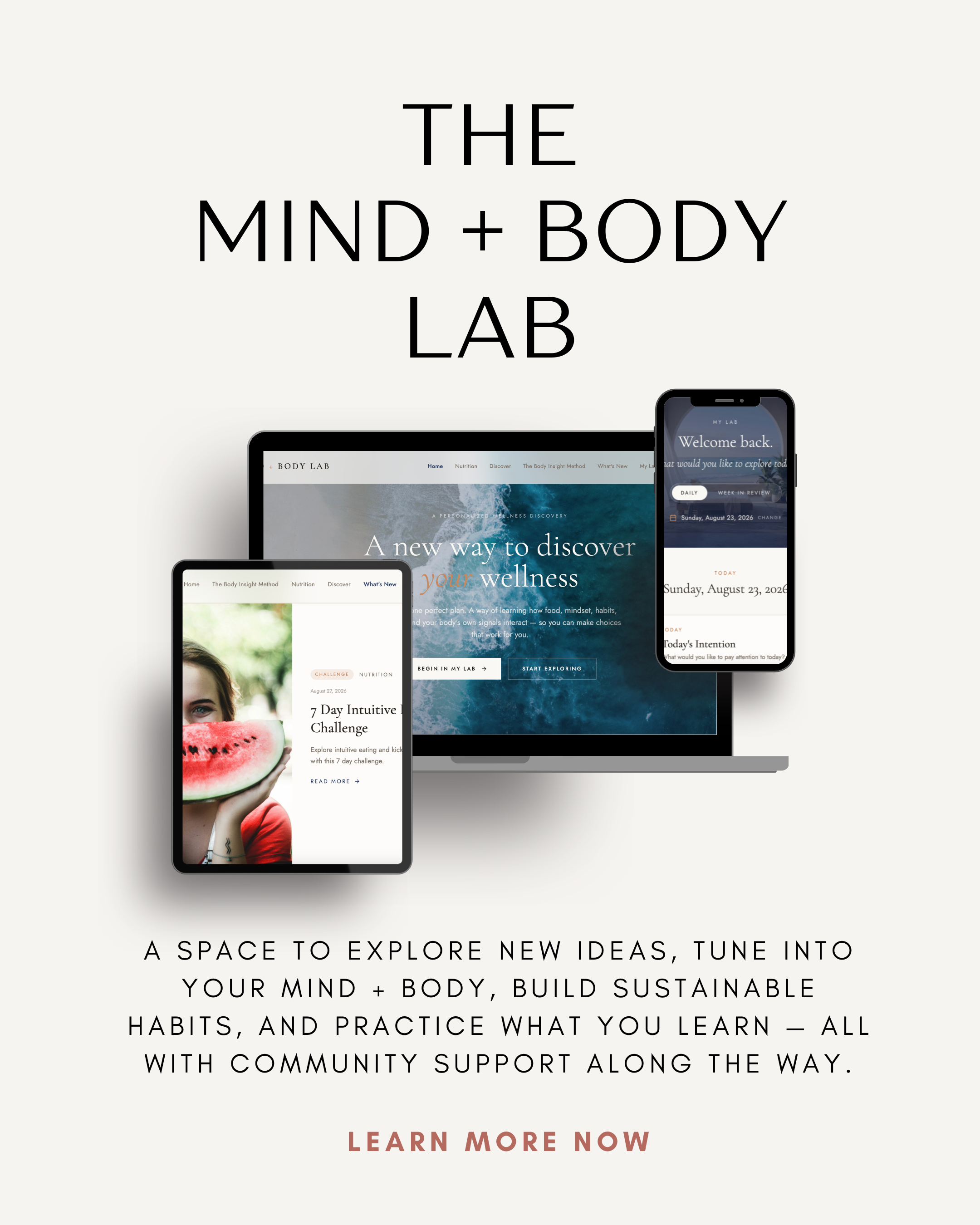
THE MIND + BODY LAB
Your mindset shapes your choices. Your body gives you feedback. The Mind + Body Lab brings these connections together through guided learning, real interaction, and tools to help you understand yourself, put what you learn into practice, and discover what works for you.
Inside the Lab:
Community & Practice — Connect with Margot and our team of coaches through weekly conversations, educational topics, wellness challenges, reflections, book clubs, and shared experiences. Ask questions, share what you're discovering, and put new ideas into practice alongside others.
My Lab: Understanding Yourself — Your personal space to record daily habits, tune into your body's signals, reflect on your experiences, and recognize patterns over time. Receive Daily + Weekly Insights based on the information you enter to help you learn from your own experience.
Guided Pathways & Tracks — Structured learning experiences with guided activities and practical action steps to help you explore topics like nutrition, mindset, habits, and body awareness.
Food & Recipes — Hundreds of healthy recipes, meal plans, meal prep tips, and practical nutrition resources, with options ranging from Mediterranean and high-protein + low-carb to vegetarian, GLP-1, anti-inflammatory, and more.
Discover — Explore educational topics covering mindset, identity, self-talk, limiting beliefs, perfectionism, self-care, motivation, eating behaviors, and more.
Because learning is just the beginning. The real magic happens when we put what we learn into practice — consistently.
Explore The Mind + Body Lab today!