




A Balanced Approach to Staying Job-Ready and Avoiding Burnout
/
For mid-career professionals balancing demanding roles, family time, and a life outside work, career preparedness can start to feel like a second job.
The core tension is real: staying sharp for unexpected openings and job readiness challenges often collides with work-life balance, and the cost shows up fast in professional well-being. At the same time, ignoring readiness entirely can stall career growth strategies and make transitions harder than they need to be.
The goal here is “ready enough”, a steady, sustainable approach that keeps options open without living on edge.
Understanding Sustainable Career Readiness
Sustainable career readiness means staying employable without turning your evenings into a nonstop job hunt. It’s a handful of small, repeatable habits that keep your skills fresh while protecting your energy and mental health. In research terms, career sustainability is the ability to keep adapting with security and room to grow.
This matters because intense bursts of searching can spike stress, then lead to quitting altogether. Steady upkeep keeps your confidence up and your options open when a surprise role appears. It also makes it easier to renew their careers when your interests or life circumstances shift.
Think of it like brushing your teeth, not doing a full dental overhaul every Sunday. You spend 15 minutes a week updating a project note, saving two roles, or messaging one contact. Small effort, big readiness. That steady base makes job market check-ins feel strategic, not constant.
Use Job-Market Research to Make Check-Ins Short and Targeted
When you ground your career readiness in well-being, information becomes your filter, not a reason to keep refreshing job boards. Staying informed on job and career trends can be as simple as checking credible workforce research that shows where demand is shifting and what roles are changing.
That context matters, because studies suggest that as burnout and dissatisfaction rise, many employers are leaning more on external hiring instead of developing existing talent, deepening skills gaps and limiting growth for both workers and organizations. Scanning sources like these UoPX workforce insights can turn that uncertainty into a clearer view of likely barriers, so your check-ins stay short, targeted, and less stressful.
Build a Low-Pressure Weekly Career Readiness Loop
This weekly loop keeps you quietly prepared for new opportunities without living in job-search mode. It works for general readers because it’s small, repeatable, and designed to protect your energy while still building momentum.
Choose one weekly “career touch” time
Pick one 20 to 30 minute block you can actually keep, like Sunday evening or midweek lunch. Treat it like a light check-in, not a hustle session, so it feels doable even during busy weeks. Consistency beats intensity here.Do a 10-minute resume refresh (no rewriting)
Add one recent win, metric, or project, then save a clean version and a “working” version you can edit later. Using a cue like set aside time helps you keep it quick and intentional instead of endlessly tinkering.Set a realistic skill plan with one tiny target
Pick one skill that matches where you want to go and define a minimum effort goal, like one video lesson or one practice task per week. Write a simple proof-of-progress line you can later put on your resume, such as “Built a basic dashboard” or “Completed Module 1.” Small progress keeps motivation up and pressure down.Build your network with two genuine touchpoints
Send one short check-in to someone you already know, and make one new connection through a shared interest group, alumni space, or professional community. Ask about their work and share a helpful resource or quick encouragement so it feels like relationship-building, not asking for favors.Close the loop with a 2-minute recovery ritual
End by writing the next tiny action you’ll do and then fully stop for the day. A simple habit like preparing mentally and physically can help your brain switch out of “always on” mode and back into regular life.
Job-Ready Without Burnout: Common Questions
Q: How do I know if I’m “ready enough” without doing too much?
A: You’re ready enough when your basics are current: a recent resume version, a clear role direction, and a short list of people you can reach out to. If you can apply to a role within an hour, you’re in great shape. Keep the goal “prepared,” not “perfect.”
Q: How can I rest without feeling like I’m falling behind?
A: Treat rest as part of your career plan, not a reward you earn. Put “off time” on your calendar the same way you’d schedule an appointment. You’ll come back sharper and less reactive.
Q: When should I actually apply for jobs versus just staying prepared?
A: Apply when you see a role that fits most of your must-haves, not every nice-to-have. If applying starts to drain you, set a weekly cap like one or two thoughtful applications. Quality beats frantic volume.
Q: Can networking be effective if I hate feeling salesy?
A: Yes, if you lead with curiosity and usefulness. Ask one real question about their work, then share something small you think would help. Relationships grow faster when they don’t feel transactional.
Build Sustainable Job Readiness Without Letting Life Shrink
Staying ready for opportunities can quietly turn into a second job, and that pressure can drain your energy fast. The steadier path is a balanced, low-drama mindset: small routines, realistic expectations, and resilience in career planning instead of constant hustle.
When that clicks, sustainable job readiness starts to feel lighter, career confidence grows, and long-term professional growth becomes something you support rather than chase. Stay ready by building rhythms, not running sprints."
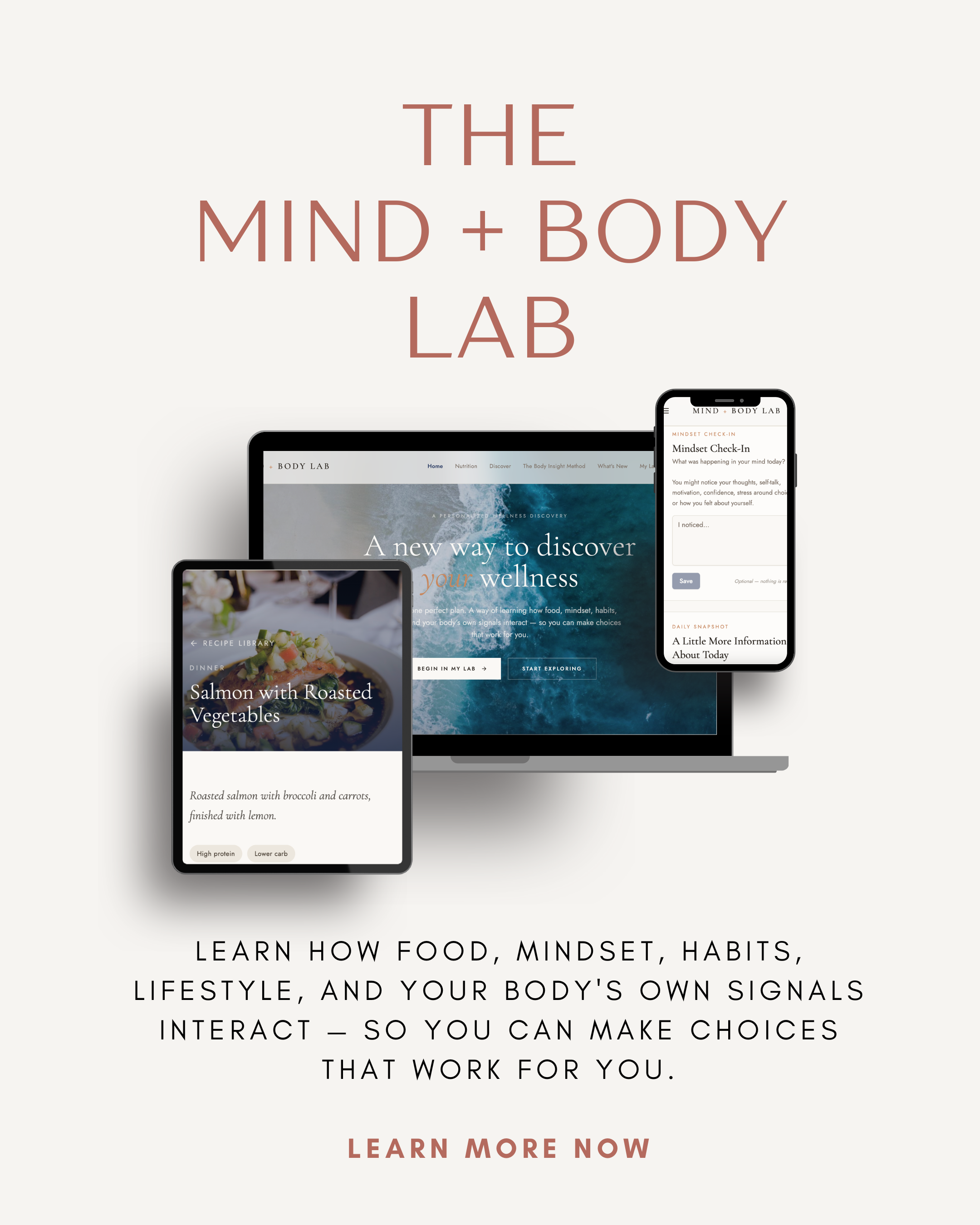
THE MIND + BODY LAB - SAY HELLO TO A NEW WAY TO APPROACH YOUR WELLNESS
A way of learning how food, mindset, habits, lifestyle, and your body's own signals interact — so you can make choices that work for you.
Includes:
Nutrition Pathways (Mediterranean, High Protein, GLP-1 & More - recipes, meal plans & action steps)
Discovery - tools & educations to learn and experiment with. Enjoy topics from mindset (identity, self-talk, limiting beliefs, perfectionism), self-care, habits and motivation to nutrition and eating behaviors.
The Body Insight Method - Learn how to tune into your body & lifestyle to create a wellness plan that works for you.
What’s New (interactive) - A space for our coaches to post weekly topics, reflective thoughts, monthly challenges and more. This is also a place for interaction. You can comment and ask questions to learn more!
My Lab (intuitive + interactive) - Your personal space to practice what you’re learning. Check in, reflect and notice what you’re learning and what’s working (or what isn’t). Let the lab provide helpful tips and pattern recognition to support your wellness & mindset goals.
Get The Mind + Body Lab Today!