



7 Healthy Habits To Help You Lose Weight
/
If you’re reading this, you’ve probably set a weight loss goal. Maybe you’re just getting started, or maybe you’ve been working toward that goal for a while and feel like things aren’t moving quite the way you expected.
Either way, you probably already know that weight loss can be tricky. What works well for one person may not work the same way for someone else, and sometimes the habits that seem small are the ones that have the biggest impact over time.
I’ve been there myself. I’ve lost 10 pounds and I’ve lost more than 30 pounds at different points in my life, so I understand what it feels like to want to change something and wonder what you’re supposed to do differently.
As a coach, I’ve also seen how easy it is to focus on the big things—workouts, calories, meal plans, the number on the scale—while overlooking the simple daily habits that actually make up your routine.
The goal isn’t to do everything perfectly. It’s to start paying attention to what you’re doing consistently, identify what might be getting in your way, and find a few habits that fit your life well enough to actually stick.
Here are seven simple habits to consider.
→ If you want a system that walks you through how to build a wellness plan unique for you, we’ve also created The Mind + Body Lab, but let’s dive into the info in this post first.
1. Eat Regularly and Pay Attention to Hunger
Skipping meals isn’t automatically a problem, but intentionally eating as little as possible in an effort to lose weight can make it much harder to create a sustainable routine.
Instead of following a rigid eating schedule, start paying attention to your hunger, fullness, energy, and satisfaction throughout the day. Some people do well with three meals, while others prefer meals and snacks depending on their schedule and needs.
The bigger question is: Are you eating in a way that leaves you nourished, satisfied, and able to make choices that support your goals?
If you regularly find yourself overly hungry at the end of the day, that’s information worth paying attention to. Your routine may need a little adjusting.
2. Drink More Water and Pay Attention to What You Drink
Hydration is one of those simple habits that can easily get overlooked.
Keep water available throughout the day and pay attention to how much you’re actually drinking. Your needs will vary depending on your body, activity level, climate, and other factors, so rather than treating one number as a universal goal, use it as a starting point and pay attention to how you feel.
It’s also worth looking at beverages that contain calories or added sugar. They can be easy to consume without providing the same level of satisfaction you might get from food.
You don’t have to eliminate every calorie-containing beverage. Just become more aware of what you’re drinking and how it fits into your overall routine.
Try this: Keep a water bottle with you and make drinking water part of the habits you already have—when you wake up, with meals, before leaving the house, or during your workout.
3. Eat More Whole, Minimally Processed Foods
You don’t need to eliminate processed foods to lose weight, and “processed” doesn’t automatically mean unhealthy.
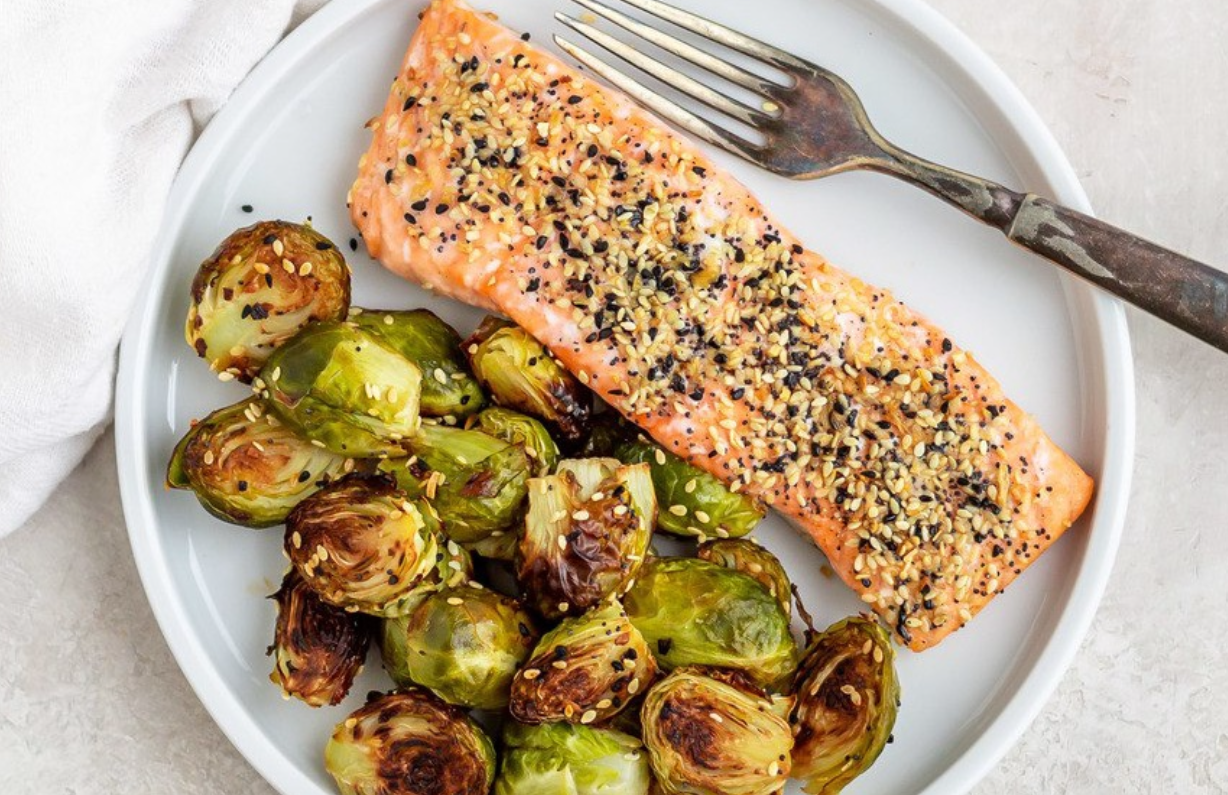
But building more of your meals around whole and minimally processed foods can be a simple way to improve the overall quality of your diet. Think vegetables, fruits, beans, lentils, whole grains, nuts, seeds, eggs, fish, lean meats, and other foods that provide protein, fiber, vitamins, minerals, and other nutrients.
The goal isn’t to create a perfect list of “good” and “bad” foods. It’s to notice what makes up most of your diet.
A packaged snack can absolutely have a place in a healthy eating pattern. The bigger picture matters more than any one food.
4. Eat the Rainbow
One of my favorite simple nutrition habits is to eat the rainbow.
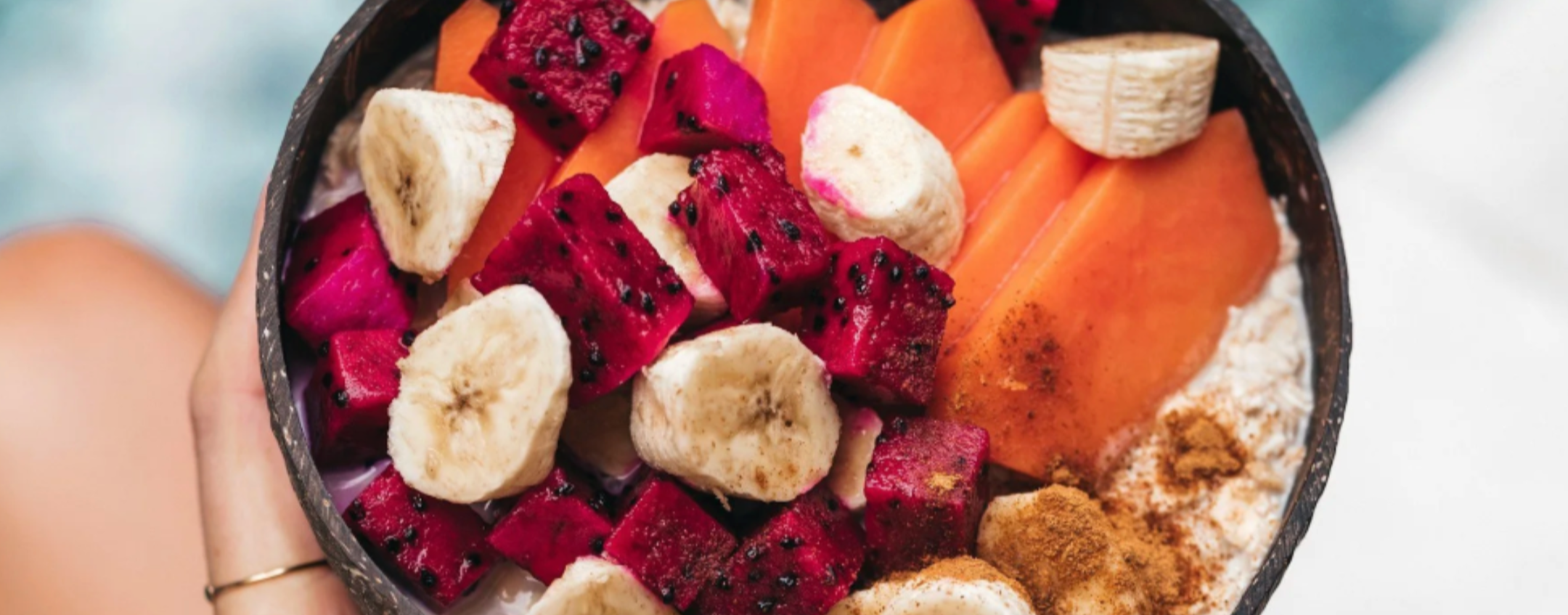
Adding a variety of colorful fruits and vegetables to your meals is an easy way to bring more variety into your diet and expose your body to a wide range of nutrients and plant compounds.
Think leafy greens, berries, tomatoes, peppers, carrots, squash, citrus, purple cabbage, beans, and all of the other colors available to you.
And if you have a hard time getting enough produce, start small. Add a handful of berries to breakfast. Put some vegetables in your lunch. Add a side salad to dinner.
You don’t have to overhaul your diet. Add more color where you can.
5. Prioritize Protein
Protein is an important part of a balanced diet and plays a role in maintaining and repairing tissues, including muscle.
How much you need depends on factors such as your body size, activity level, age, health status, and overall diet, so there isn’t one perfect number that applies to everyone.
Rather than getting caught up in hitting an exact protein target, start by looking at your meals.
Is there a source of protein here?
That might be eggs at breakfast, Greek yogurt at a snack, chicken or fish at lunch, beans or lentils at dinner, tofu, cottage cheese, or another protein source that works for you.
If protein is something you tend to overlook, making it more intentional can be a simple habit to experiment with.
6. Move Your Body
Movement matters for so much more than the number on the scale.
Regular physical activity supports cardiovascular health, strength, mobility, energy, and overall well-being. And you don't have to spend an hour at the gym every day to make movement part of your life.
Walk. Strength train. Take a fitness class. Ride your bike. Stretch. Play with your kids. Garden. Go for a swim. Find something you actually enjoy doing.
If you have 60 minutes, great. If you have 20 minutes, use the 20 minutes.
Even better, look for opportunities to move throughout your day instead of thinking that movement only counts when you're formally exercising.
The best movement is often the movement you’ll actually keep doing.
7. Make the Most of the Opportunities You Have
This might be the most important habit on the list because life rarely goes exactly according to plan.
Maybe you’re traveling. Maybe you’re eating at a restaurant. Maybe your schedule is packed and you don’t have time for your usual workout. Maybe you’re having a stressful week.
Instead of thinking, Well, I already messed up, so it doesn’t matter, look at what you can do.
Choose an option that works for you at the restaurant. Ask for a modification if you need one. Take a 10-minute walk when you don’t have time for a full workout. Take the stairs when it makes sense. Get outside between meetings. Make the next meal an opportunity to get back to your normal routine.
There will always be circumstances you can’t control. What you can practice is making the best decision available to you in that moment.
And remember: one meal, one missed workout, or one off day doesn’t determine your progress. Your overall pattern does.
TAKEAWAYS
Weight loss isn’t about finding the perfect combination of rules and following them forever. It’s about understanding your own patterns and building habits that support the way you want to feel and function.
This is where tracking can be useful—not as a way to judge yourself, but as a way to gather information.
You might track your food, movement, water, sleep, mood, energy, hunger, or even how satisfied you feel after meals. You don’t have to track everything. Choose what would actually help you learn something.
Then look for patterns.
What seems to be working? What isn’t? What feels easy to maintain? Where do you consistently get stuck? What happens when your schedule changes?
Your experience is feedback.
Rather than trying to change everything at once, choose one habit to focus on. Practice it consistently. Pay attention to what happens. Then assess, investigate, and modify as needed.
There is no one-size-fits-all approach to weight loss. Your body, your preferences, your circumstances, and your life all matter.
The goal is to find what works for you—and then keep learning from the process.
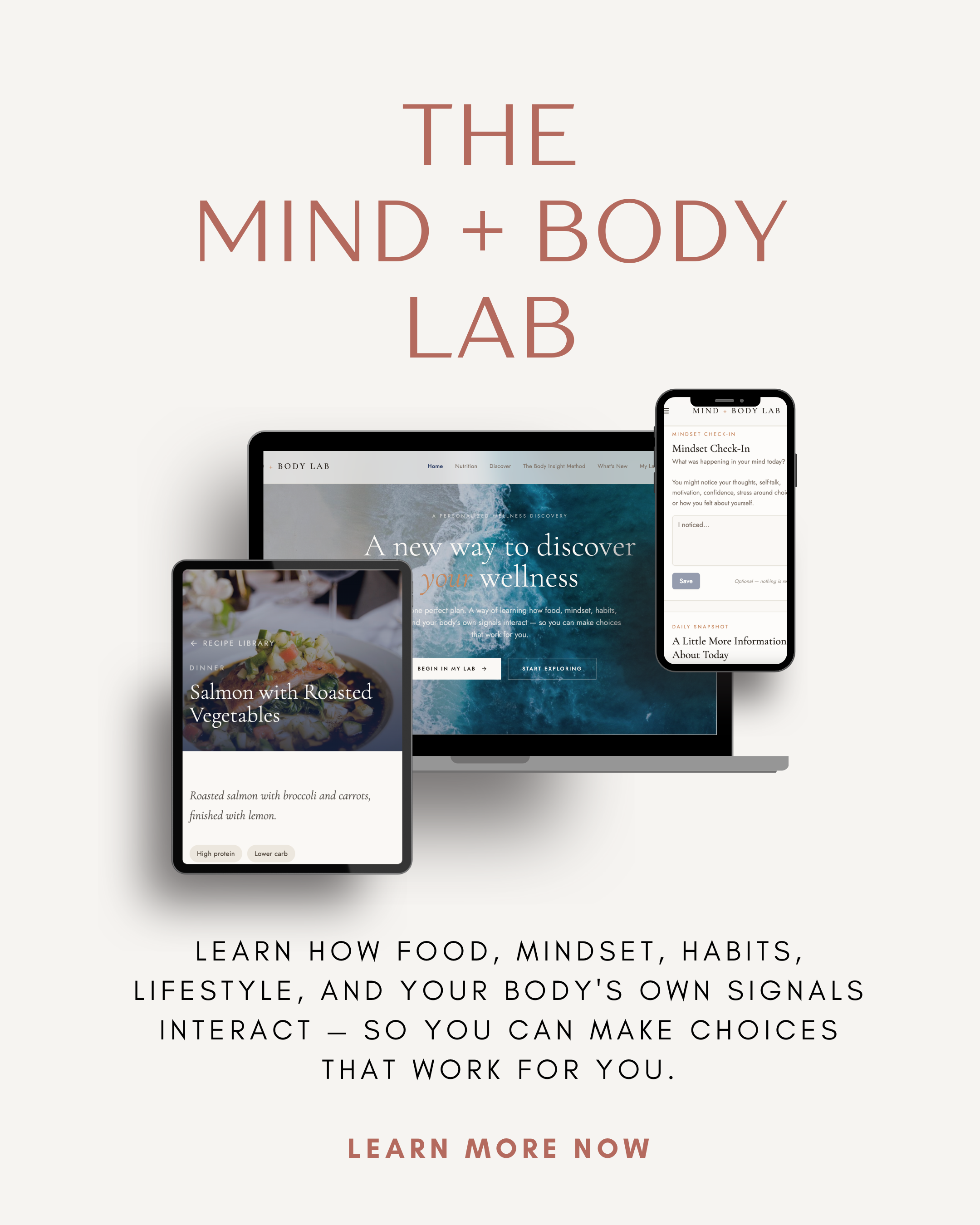
THE MIND + BODY LAB - SAY HELLO TO A NEW WAY TO APPROACH YOUR WELLNESS
A way of learning how food, mindset, habits, lifestyle, and your body's own signals interact — so you can make choices that work for you.
Includes:
Nutrition Pathways (Mediterranean, High Protein, GLP-1 & More - recipes, meal plans & action steps)
Discovery - tools & educations to learn and experiment with. Enjoy topics from mindset (identity, self-talk, limiting beliefs, perfectionism), self-care, habits and motivation to nutrition and eating behaviors.
The Body Insight Method - Learn how to tune into your body & lifestyle to create a wellness plan that works for you.
What’s New (interactive) - A space for our coaches to post weekly topics, reflective thoughts, monthly challenges and more. This is also a place for interaction. You can comment and ask questions to learn more!
My Lab (intuitive + interactive) - Your personal space to practice what you’re learning. Check in, reflect and notice what you’re learning and what’s working (or what isn’t). Let the lab provide helpful tips and pattern recognition to support your wellness & mindset goals.
Get The Mind + Body Lab Today!