




10 Healthy Habits To Start The New Year
/
The new year is always a timely opportunity to prioritize your well-being and step into a healthier, more balanced lifestyle. While big goals can be motivating, it’s often the small daily habits that create sustainable change over time. Daily choices compound into long-term transformation, leading to a stronger, happier YOU.
Whether you’re just starting your journey or looking to refine your routines, these 10 simple health habits can serve as the foundation for creating balance, energy, and happiness in 2025.
And here’s the secret: these habits can be customized to fit your body and your lifestyle. Everyone’s journey is different, and finding what works for you is part of the journey itself.
Let’s dive into these simple, effective habits that can help you feel your best this year!
1. Prioritize Daily Movement
Movement isn’t just about burning calories—it’s about connecting with your body and mind. Daily movement has tremendous benefits, including improving mental clarity, managing stress, boosting energy, and increasing strength and flexibility.
You don’t have to sign up for a marathon or join a gym to reap the benefits. Movement can be as simple as a brisk walk, a dance session to your favorite playlist, yoga, or strength training at home. The key is consistency.
Tip: Experiment with activities you enjoy to ensure you’ll stick with them. If walking isn’t exciting, try swimming, cycling, hiking, or even a beginner HIIT class. Movement that feels fun is easier to make a habit!
Action Step: Schedule a 20–30 minute time block daily for movement. Treat it like any other appointment and prioritize consistency.
2. Hydration is Your Secret Weapon
Water is essential for so many bodily functions: flushing out toxins, regulating body temperature, supporting digestion, and even improving your mood. Yet so many of us overlook proper hydration.
The general recommendation is to drink half your body weight in ounces of water each day. However, this can vary depending on activity, climate, and individual needs.
Hydration Hacks:
Add fresh lemon, cucumber, or mint to your water for a refreshing twist.
Herbal teas are a great way to stay hydrated without relying solely on plain water.
Keep a reusable water bottle with you throughout the day as a visual reminder to drink water.
Pro Tip: Hydration isn’t just about quantity; listen to your body. If you’re feeling fatigued, your body may be signaling dehydration.
3. Build Balanced Meals That Fuel Your Body
Balanced nutrition isn’t about cutting out foods or following restrictive diets—it’s about making choices that nourish your body and give you the energy to thrive. Aim for a balance of protein, healthy fats, fiber, and complex carbohydrates in every meal.
Here’s a quick breakdown of what balanced meals might look like:
Protein: Choose lean options like chicken, fish, eggs, tofu, or beans.
Healthy Fats: Include sources like avocado, nuts, olive oil, or salmon.
Fiber: Incorporate fruits, vegetables, and whole grains for sustained energy and improved digestion.
Balanced meals support more than just weight goals—they also improve mood, cognitive function, and performance.
Action Step: Plan your week in advance by preparing simple, healthy meals at home. Meal prepping for a few hours on Sunday can eliminate stress during the week and help you stay on track.
4. Prioritize Quality Sleep
Sleep is one of the most important components of health and recovery. It helps repair your body, improve focus and memory, and support hormone balance and emotional well-being.
Aim for 7-8 hours of quality sleep every night. Establishing a consistent sleep schedule can significantly enhance your overall health and energy levels.
Sleep Hacks to Try:
Create a calming bedtime routine that helps you wind down before bed. This could include reading, journaling, or taking a warm bath.
Reduce exposure to blue light from screens at least one hour before bed.
Keep your room cool, dark, and quiet to create a restful environment.
Sleep is a foundational habit for recovery, emotional balance, and physical performance—don’t skimp on it!
5. Practice Mindful Stress Management
Stress is a part of life, but how you manage it makes all the difference. Chronic stress has physical effects on the body, including increased blood pressure, inflammation, and mental fatigue. Finding ways to manage stress is crucial for long-term health and happiness.
Mindfulness practices such as meditation, journaling, yoga, or simple breathing exercises can help reset your nervous system and reduce the impact of stress.
Action Step: Dedicate at least 5-10 minutes per day to a stress management activity. Even 5 minutes of focused breathing can reset your day.
6. Build a Morning Routine That Empowers You
How you begin your morning sets the tone for your entire day. A simple morning routine can give you momentum, focus, and a sense of control. It doesn’t have to be complicated—consistency matters more than perfection.
Consider incorporating one or two of the following into your morning:
A few minutes of stretching or movement.
A protein-rich breakfast to fuel your body.
Journaling or meditating to set intentions for the day.
Tip: Don’t rush your morning. Take time to center yourself before jumping into the day’s demands.
7. Limit Screen Time for Better Mental Space
Technology has made life easier in many ways, but excessive screen time can interfere with mental health, sleep, and productivity. If scrolling or tech distractions have become a part of your daily habits, try setting boundaries to create mental space.
Simple Screen-Free Habits:
Establish a rule for no screens during dinner.
Set time limits for social media apps.
Swap technology for reading, movement, or hobbies.
By being intentional about your screen use, you can free up mental energy and reduce overwhelm.
8. Make Strength Training a Regular Habit
Strength training isn’t just for athletes or bodybuilders. Incorporating strength or bodyweight movement builds functional strength, improves metabolism, and supports emotional well-being.
You can begin with simple resistance band workouts, yoga, or bodyweight routines if you’re new to strength training.
Pro Tip: Strength training releases endorphins, improves bone density, and makes everyday activities easier.
9. Schedule Recovery Days to Prioritize Your Body
Recovery is a necessary part of health and fitness. Your body needs time to repair and recover to ensure you avoid overtraining and injury.
On your recovery days, engage in light movement like stretching, yoga, or walking. These activities allow your body to heal while maintaining mobility and balance.
10. Track Your Progress and Celebrate Wins
Health isn’t about perfection—it’s about celebrating small, consistent steps. Whether it’s drinking enough water for a week or completing a new workout, every win is progress.
Use journals, habit trackers, or apps to reflect on your journey. Tracking progress gives you motivation and helps you stay consistent.
These 10 habits are simple, achievable, and effective. But the real magic comes when you adapt them to your unique body and your lifestyle.
More To Discover
Want to dive deeper? Here are a few resources to keep the momentum going:
📌 Related Posts
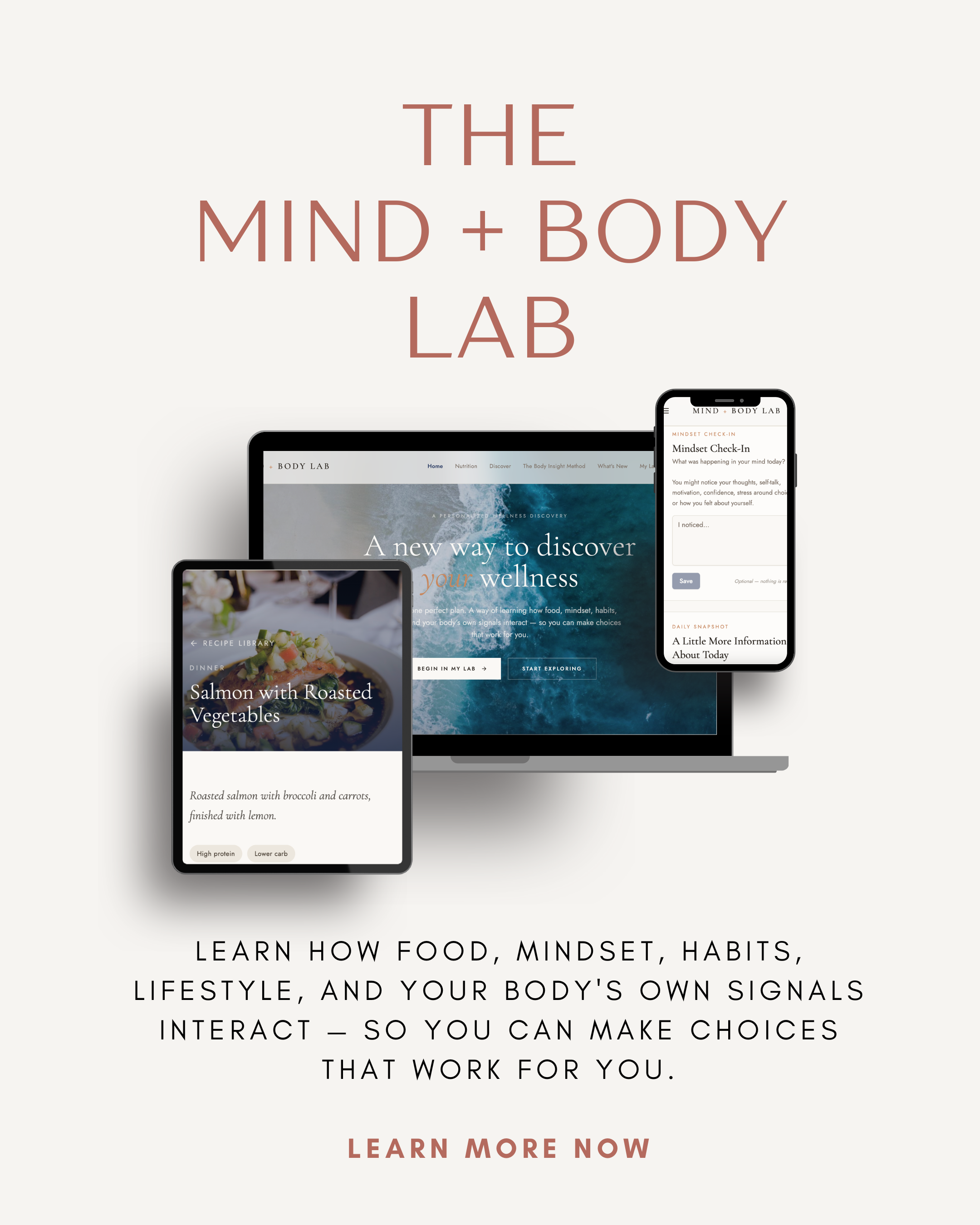
THE MIND + BODY LAB - SAY HELLO TO A NEW WAY TO APPROACH YOUR WELLNESS
A way of learning how food, mindset, habits, lifestyle, and your body's own signals interact — so you can make choices that work for you.
Includes:
Nutrition Pathways (Mediterranean, High Protein, GLP-1 & More - recipes, meal plans & action steps)
Discovery - tools & educations to learn and experiment with. Enjoy topics from mindset (identity, self-talk, limiting beliefs, perfectionism), self-care, habits and motivation to nutrition and eating behaviors.
The Body Insight Method - Learn how to tune into your body & lifestyle to create a wellness plan that works for you.
What’s New (interactive) - A space for our coaches to post weekly topics, reflective thoughts, monthly challenges and more. This is also a place for interaction. You can comment and ask questions to learn more!
My Lab (intuitive + interactive) - Your personal space to practice what you’re learning. Check in, reflect and notice what you’re learning and what’s working (or what isn’t). Let the lab provide helpful tips and pattern recognition to support your wellness & mindset goals.
Get The Mind + Body Lab Today!