




Mindful Eating: Appetite Awareness
/
Why Use Appetite Awareness?
Appetite awareness is the practice of paying attention to the signals your body gives you around hunger, fullness, satisfaction, and food—without immediately judging or overriding those signals.
It’s learning to notice things like:
When you’re physically hungry versus eating because food is available or it’s simply “time to eat”
How hungry you are before you eat
How different foods affect your hunger and satisfaction
When you’re comfortably full versus overly full
Whether you’re still hungry after a meal
How stress, sleep, emotions, activity, and your daily routine influence your appetite
What foods actually leave you feeling satisfied
And importantly, appetite awareness isn't about eating perfectly or never eating when you're not physically hungry. Life doesn't work that way. Sometimes we eat socially, sometimes we eat because something sounds really good, and sometimes we eat because it's simply time for a meal.
The goal is awareness—not rules.
Why Appetite Awareness Can Be So Helpful
1. Calorie Counting Isn’t Always Accurate
While calorie counting is a common weight-loss strategy, it comes with limitations:
Nutrition labels represent averages, and calorie values can fluctuate by up to 20%. This means the actual number of calories you’re consuming may differ from what is listed.
Calorie counting is an approximation that may lead to frustration and stress. Instead of focusing solely on numbers, focusing on how you feel can lead to a more sustainable, intuitive approach.
2. Absorption Plays a Key Role
The idea of “you are what you eat” is accurate to an extent, but a better rule to remember is: you are what you absorb. Your body’s ability to absorb nutrients varies based on factors like hydration, stress, and digestion. This means that even if you eat the “right” foods, your body might not fully absorb all the nutrients they contain.
3. Counting Isn’t for Everyone
For some, counting calories or macronutrients can feel overwhelming or dull. And that’s okay! While structured tracking methods can help certain individuals, many find focusing on behaviors and patterns—rather than numbers—easier and more sustainable in the long term. Your behaviors directly influence the habits that shape your health journey.
Appetite awareness shifts the focus from rigid tracking to self-observation, helping you eat mindfully without turning food into a numbers game.
Hourly Guide: Understanding Your Hunger Levels
Have you ever wondered how you should feel a few hours after a meal? The following timeline can help you evaluate if you’re eating the right amount of food for your body:
0 – 1 Hour After Your Meal:
You might still feel a bit hungry. It can take 15–20 minutes for your body to signal satiety, so give yourself time. If after 20 minutes you still feel hungry, eat a little more.1 Hour After Your Meal:
You should feel satisfied, with no strong hunger or desire to eat again. If you are truly hungry at this point, it could mean you didn’t eat enough at your last meal.2 Hours After Your Meal:
You may notice mild hunger—this is normal. However, if your hunger feels intense, it may mean you ate too many carbs or didn’t eat enough protein and healthy fats at your last meal.3 Hours After Your Meal:
This is when you should feel “ready to eat” again with a hunger level around 7 or 8 out of 10. Your physical activity or exercise levels can affect this hunger signal. If you’re not hungry at this point, you may have eaten too much during your previous meal.4 Hours After Your Meal:
If you find yourself ravenously hungry (unable to resist heading for the kitchen), it may indicate that your meals and snacks are too far apart or lacking balance. Look at your portion choices and ensure you’re including a balance of carbohydrates, protein, and fat.
Use this guide to assess whether you’re eating in alignment with your hunger signals or if adjustments are needed.
Putting Appetite Awareness Into Action
Would journaling help? This is entirely a personal choice. While some people find tracking helpful, others prefer intuitive eating without formal journaling. Regardless, tracking can provide meaningful insights if you’re open to it.
Journaling Tips:
If you’re open to journaling, track the following to fine-tune your body awareness:
What you ate and how much: Include the composition of your plate—protein, carbohydrates, fats, vegetables, and fruits.
When you ate: Record the time of day.
Beverages: Note any drinks consumed with your meal or snack.
How you felt afterward: Reflect on your feelings 1 hour, 2 hours, and 3 hours post-meal. Were you hungry, lethargic, energized, or feeling good?
Your journal can act as a personalized map, helping you identify patterns between what you eat, how much you eat, and how you feel afterward. You might uncover insights like:
Feeling sluggish after certain foods.
Noticing that certain times of day impact your energy levels.
Learning which meals or snacks leave you feeling satiated and energized.
By tracking these details over time, you’ll gain awareness about what makes your body feel and perform its best.
The Takeaway: Build Your Personalized Map
Appetite awareness isn’t about restrictions, rigid rules, or counting every bite you eat. It’s about listening to your body, learning how your choices impact your physical and mental well-being, and adjusting your habits to better align with how you feel.
With consistent attention and practice, appetite awareness can transform how you approach food—turning it from a numbers game into a sustainable, intuitive part of your overall health journey.
Start small:
Take a moment before your next meal to assess how hungry you are.
Observe how you feel after eating.
Adjust your food choices or meal patterns based on how your body reacts.
Your body knows itself best—learn to trust it.
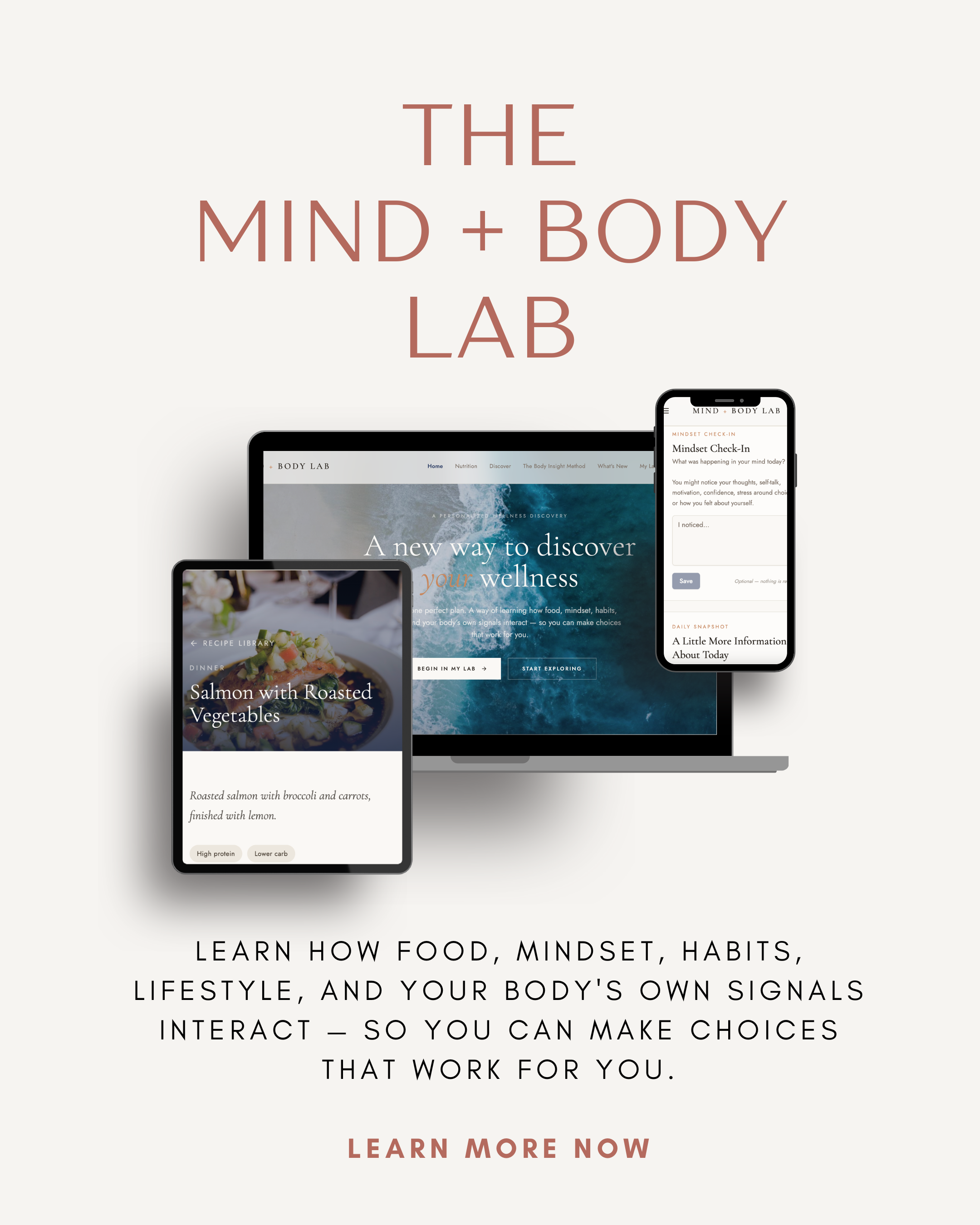
→ Want to go beyond the basics and dive further into wellness? Explore The Mind + Body Lab and discover the tools, guidance, and support to help you create lasting wellness.
MORE READING
THE MIND + BODY LAB - SAY HELLO TO A NEW WAY TO APPROACH YOUR WELLNESS
A way of learning how food, mindset, habits, lifestyle, and your body's own signals interact — so you can make choices that work for you.
Includes:
Nutrition Pathways (Mediterranean, High Protein, GLP-1 & More - recipes, meal plans & action steps)
Discovery - tools & educations to learn and experiment with. Enjoy topics from mindset (identity, self-talk, limiting beliefs, perfectionism), self-care, habits and motivation to nutrition and eating behaviors.
The Body Insight Method - Learn how to tune into your body & lifestyle to create a wellness plan that works for you.
What’s New (interactive) - A space for our coaches to post weekly topics, reflective thoughts, monthly challenges and more. This is also a place for interaction. You can comment and ask questions to learn more!
My Lab (intuitive + interactive) - Your personal space to practice what you’re learning. Check in, reflect and notice what you’re learning and what’s working (or what isn’t). Let the lab provide helpful tips and pattern recognition to support your wellness & mindset goals.
Get The Mind + Body Lab Today!